Despite attempts by historians from Andhra to obfuscate and erase its history, Telangana always retained and fought for its self-respect and self-rule. Here is the record of an ancient civilisation, from its earliest human habitations through its mightiest empires, told through the evidence that survives in coin, inscription, stone and soil.
The archaeological record of Telangana reaches back to the Paleolithic age. All ten districts of the region show traces of continuous human habitation through Mesolithic, Neolithic and Metal ages, discovered through excavations of stone tools, microliths, cists, dolmens, cairns and menhirs. Even where systematic official research was stalled for six decades after 1956, individual researchers and enthusiasts kept finding what the land contained: the evidence of a people who had been here, continuously, since before memory.
The first coins in the Indian subcontinent to carry insignia were issued in Telangana. The first significant kingdom after the Mauryan empire rose from Telangana. The first woman ruler in the subcontinent was a Telangana queen. The first disciples of the Buddha came from here. The tank irrigation systems built here lasted seven centuries. This is not a history that needs embellishment. It needs only to be told.
The Timeline of Telangana's Civilisation
Scroll to explore 2,500 years of Telangana's history. Each card reveals as you reach it.
Up to 1000 BCE
Pre-History
Human habitations across all ten districts of Telangana from the Paleolithic age through Mesolithic, Neolithic and Metal ages. Megalithic stone structures, cairns, cists, dolmens and menhirs found across the region. Iron ore smelting remnants demonstrate advanced artisanship for at least two thousand years.
All ten districts show traces of continuous habitation from the earliest ages of human settlement in the subcontinent.
1000 BCE to 300 BCE
Pre-Satavahana Period
Telangana referenced as a geographical entity in Buddhist and mythological texts. Rulers at Kotalingala issued their own coins, the first punch-marked coins with insignia in the subcontinent. Megasthenes, visiting India in the 4th century BCE, recorded 30 fortified towns of the Andhras, the majority in Telangana.
Bavari from Karimnagar sent disciples to north India to learn and spread Buddhism. Kondanna, one of the Buddha's first five disciples, bears a distinctly Telangana name.
250 BCE to 200 CE
The Satavahanas
The first significant kingdom after the fall of the Mauryan Empire arose from Telangana. The earliest Satavahana capital was Kotalingala in Telangana, not Amaravati in coastal Andhra as some historians have claimed. Coins of kings Simuka, Siri Satavahana, Satakani I and their governors were discovered at Kotalingala. Literature like Gathasaptashati and the paintings of Ajanta flourished under Satavahana patronage.
The Satavahanas ruled a larger area of the peninsula with oceans as borders on three sides. Their first capital was Kotalingala, Telangana.
200 CE to 950 CE
The Post-Satavahana Kingdoms
After the Satavahanas, Telangana was ruled by successive kingdoms including the Ikshvakus, Vakatakas, Vishnukundins, Badami Chalukyas, Rashtrakutas, Vemulavada Chalukyas, Kalyani Chalukyas, Mudigonda Chalukyas, Kanduri Chodas and Polvasa dynasty. Mainstream Andhra historians described this as a dark period without political formation, but current research found a flourishing succession of kingdoms throughout.
Seven centuries of successive kingdoms, each building on the one before. Telangana was never without governance or culture.
950 CE to 1323 CE
The Kakatiyas
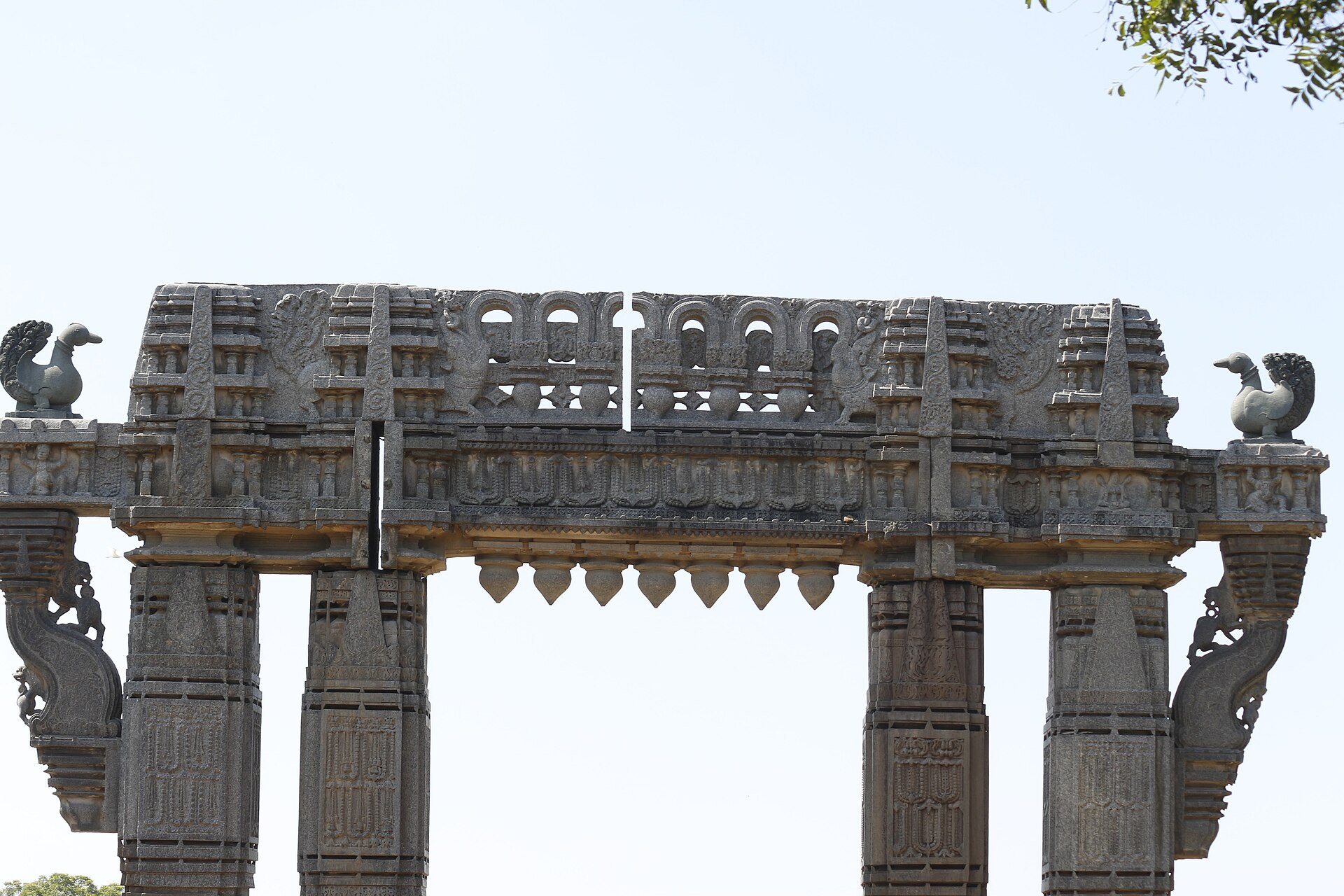
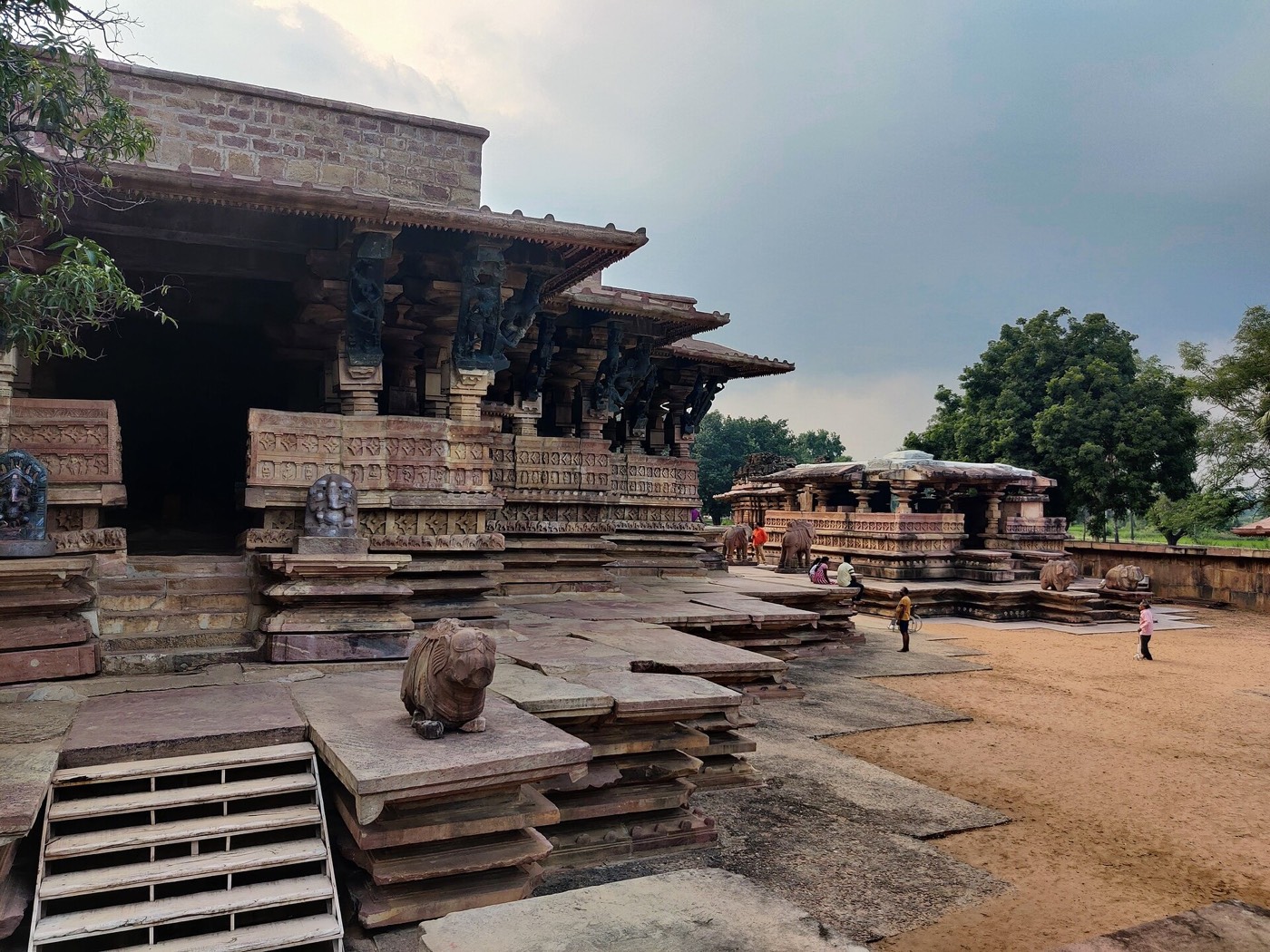
Sub-feudatories of the Rashtrakutas who founded their own dynasty around 950 CE and lasted three and a half centuries, uniting all Telugu-speaking lands. Kings like Ganapatideva, Rudradeva and Prataparudra built the kingdom into one of the greatest powers of the Deccan. Rudramadevi became the first woman ruler in the subcontinent. The kingdom ruled first from Hanumakonda and then from Warangal. Their tank irrigation system, a network of chain tanks perfectly suited to the undulating terrain, made the kingdom one of the most agriculturally productive in Asia.
The Kakatiyas built the tank network that irrigated Telangana for seven centuries. Their legacy in stone, water and sculpture remains the greatest inheritance of the region.
1323 to 1496
Post-Kakatiya Interregnum
After Prataparudra was defeated in 1323 by Ulugh Khan, the future Muhammad bin Tughlaq, commanding the armies of the Delhi Sultanate (Malik Kafur's earlier invasion of 1309-10 had first made the Kakatiyas tributaries of Delhi), the Kakatiya kingdom fragmented under local governors declaring independence. For approximately 150 years, Telangana was under different rulers: Musunuri Nayakas, Padmanayakas, Kalinga Gangas, Gajapatis and Bahmanis. The administrative and cultural infrastructure of the Kakatiya period continued to shape the region through this transition.
Prataparudra, according to legend, killed himself on the banks of the Narmada rather than surrender when being taken to Delhi as a prisoner of war.
1496 to 1687
The Qutb Shahis
Sultan Quli Qutb Shah, subedar for Telangana under the Bahmanis, declared independence in 1496 with Golconda as his capital. Seven sultans of this dynasty ruled not only Telangana but the entire Telugu-speaking land including parts of present-day Maharashtra and Karnataka. They founded Hyderabad in 1591, built the Charminar, the Golconda Fort and established the Ganga-Jamuna tehzeeb, the composite culture of Hindu and Muslim traditions that made Hyderabad unique. Qawwali, Ghazals and Mushairas flourished under their patronage. The Mughal empire defeated Golconda in 1687.
The Qutb Shahis founded Hyderabad in 1591. The city they built would become the fifth largest in India by the time of the 1956 merger, 365 years later.
1724 to 1948
The Asaf Jahis, The Nizams
Qamar-ud-din Khan, given the title Nizam-ul-Mulk, established the Asaf Jahi dynasty in 1724. Seven Nizams ruled Hyderabad across 224 years, building one of the most sophisticated princely states in Asia. By 1769, Hyderabad had become the formal capital. The state had its own electricity department from 1910, its own universities, hospitals, railways and administrative systems. When India became independent in 1947, Hyderabad remained independent for 13 months before Operation Polo on 17 September 1948 brought it into the Indian Union.
Seven Nizams. 224 years. One of the most advanced and administratively sophisticated princely states in Asia. All of it was Telangana's inheritance in 1956.
1948 to 2014
The Long Road to Statehood
After Operation Polo in September 1948, Hyderabad State became part of India. In 1956 it was merged with Andhra state despite the objections of Telangana's people and the recommendation of the States Reorganisation Commission for a separate Telangana state. Fifty-eight years of struggle, broken promises, police firing, hunger strikes and mass agitation followed. On 2 June 2014, Telangana was formed as the 29th state of India, restoring what had been taken in 1956.
2 June 2014. The 29th state of India. The restoration of a civilisation's right to govern itself.
A Civilisation That Was Never Erased
Despite the official efforts of the integrated Andhra Pradesh to ignore, belittle and erase Telangana's history, turning it into an appendage or a footnote between 1956 and 2014, much of what this land built survived. The Kakatiya tanks that were damaged after the merger had still irrigated Telangana's farms for seven centuries before they were neglected. The Qutubshahi monuments that Hyderabad was built around had stood for four centuries. The Asaf Jahi administrative infrastructure that served as the foundation of post-independence Hyderabad had been built over two hundred years. History is not so easily erased.
Firsts From Telangana's History
- First punch-marked coins with insignia in the Indian subcontinent, issued at Kotalingala, Telangana, before the Satavahanas.
- First significant post-Mauryan kingdom, the Satavahanas, with their earliest capital at Kotalingala, Telangana.
- First woman ruler in the Indian subcontinent, Rudramadevi of the Kakatiya dynasty, Warangal.
- One of the first five disciples of the Buddha, Kondanna, bears a distinctly Telangana name, and the earliest known Buddhist township of Kondapur is in Medak district.
- The Kakatiya tank irrigation system, one of the most sophisticated in Asia, irrigating 13 lakh acres through a network of 70,000 tanks, functional for seven centuries.
- The Golconda diamond mines, source of the world's most famous diamonds including the Koh-i-Noor and the Hope Diamond, located in Telangana under Qutubshahi rule.
- The Electricity Department of the Hyderabad State established in 1910, forty-three years before the Andhra state was even created.