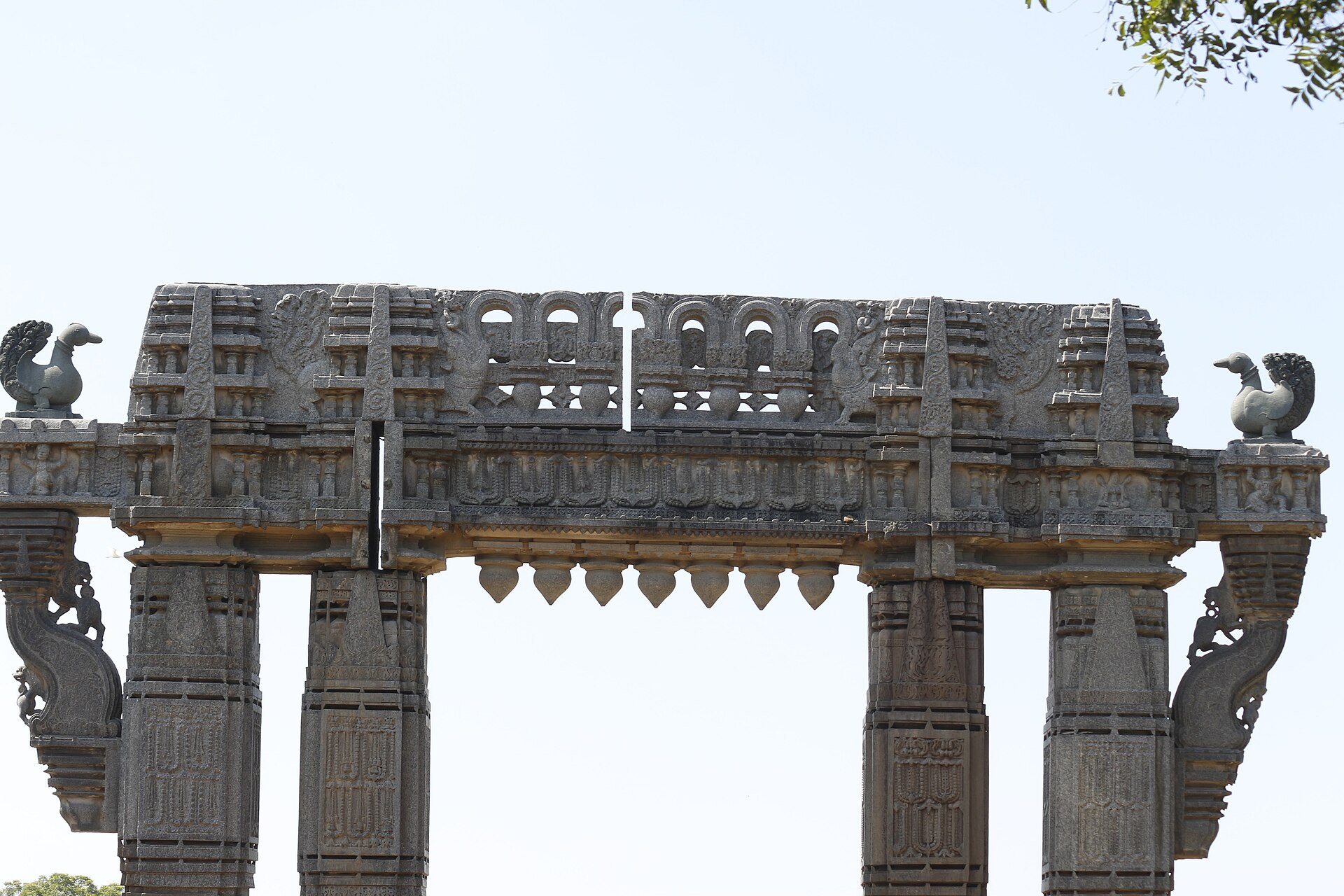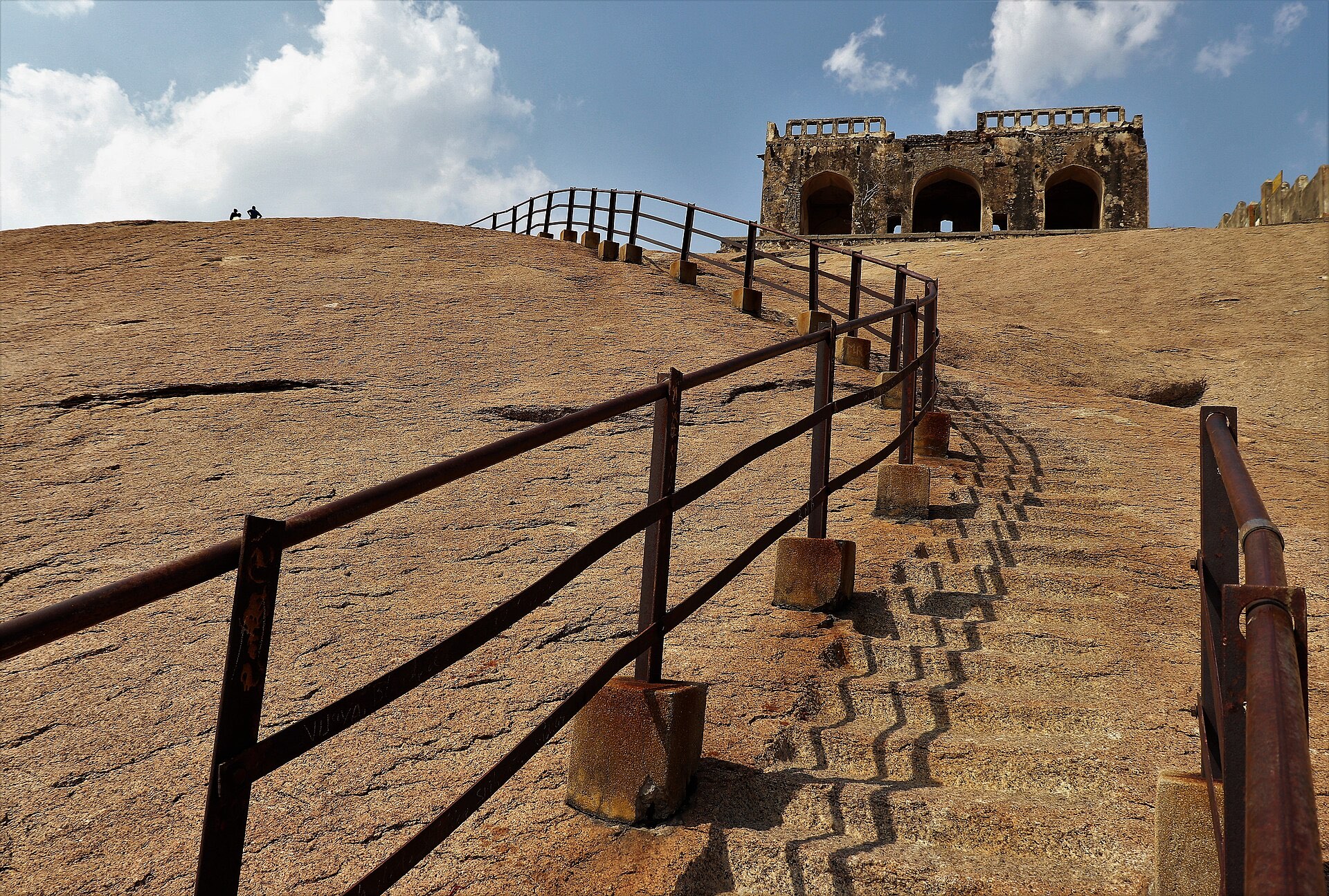
South of North and North of South, Telangana has long been the meeting place of India's diverse languages and cultures. Located on the uplands of the Deccan plateau, it is the link between the north and south of India, bounded by Maharashtra and Chhattisgarh to the north, Karnataka to the west and Andhra Pradesh to the south and east. The rivers Krishna and Godavari flow through it, carrying with them the water and the history of a civilisation that reaches back before recorded memory. Hyderabad, Warangal, Nizamabad and Karimnagar are its major cities. Its capital, Hyderabad, stands as what it has always been: a miniature India, the best example of the country's composite culture, pluralism and inclusiveness.
As a geographical and political entity, Telangana was born on 2 June 2014 as the 29th and youngest state in the Union of India. But as an economic, social, cultural and historical entity, it has a glorious history of at least two thousand five hundred years. Megalithic stone structures such as cairns, cists, dolmens and menhirs found in several districts demonstrate human habitations thousands of years ago. Remnants of iron ore smelting found at many places prove the hoary roots of artisanship and tool-making for at least two thousand years. The reference to Asmaka Janapada, part of present Telangana, as one of the 16 Janapadas of ancient India proves the existence of an advanced stage of society.
The Geography of Telangana
Telangana occupies the uplands of the Deccan plateau, a position that has shaped its history, its economy and its culture across millennia. The plateau's undulating terrain, punctuated by rivers, hills and forest, determined how its people farmed, how its kings built their kingdoms and how its traders connected the north and south of the subcontinent. The great rivers Krishna and Godavari define its landscape, flowing through the region for their longest stretches in any single state, carrying with them the waters that have sustained Telangana's agriculture for thousands of years.
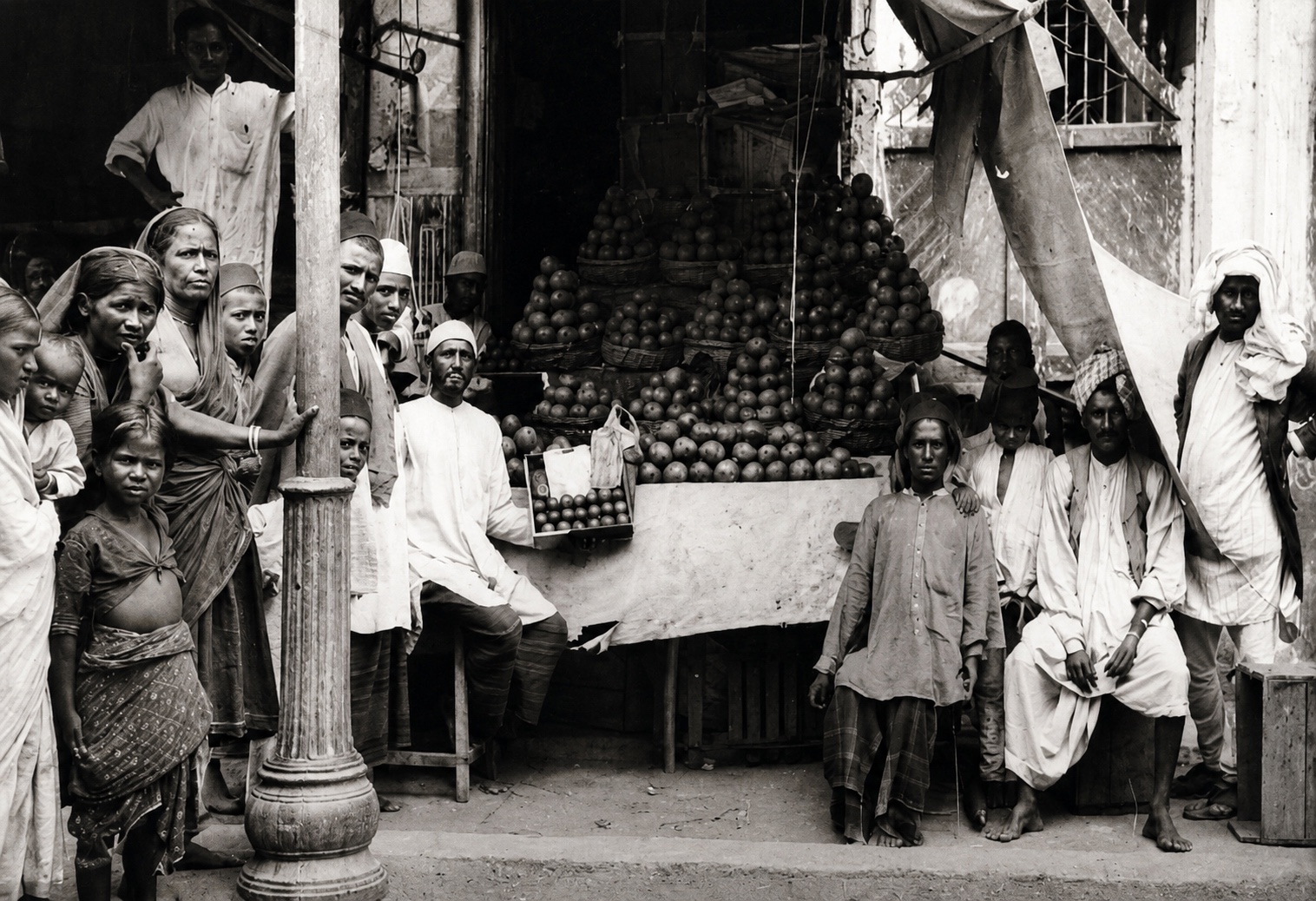
The Empires That Rose From This Land
In the historical age, Telangana gave rise to mighty empires and kingdoms whose reach extended across the subcontinent. The Satavahanas, Vakatakas, Ikshvakus, Vishnukundins, Chalukyas, Kakatiyas, Qutb Shahis and Asif Jahis all arose from this land. The emergence and flourishing of these powerful political formations is itself proof of the existence of a sturdy economic, social and cultural structure that had been building here for millennia before each of them came to power.
One of the first five disciples of the Buddha, Kondanna, bears a name that is typically from Telangana. The earliest known Buddhist township of Kondapur in Medak district is believed to be named after him. The Buddha himself acknowledged that it was Kondanna who first truly understood him. Bavari, a Brahmin from Badanakurti in Karimnagar, sent his disciples all the way to north India to learn Buddhism and spread its message in this region. Megasthenes, who visited India in the 4th century BCE, wrote that there were 30 fortified towns of the Andhras, a majority of them in Telangana.
The Kingdoms of Telangana, A Continuous Civilisation
- Pre-Satavahana rulers, 1000 to 300 BCE, with Kotalingala as capital, issuing their own punch-marked coins, the first in the subcontinent to do so with insignia.
- Satavahanas, 250 BCE to 200 CE, the first significant kingdom of the region, with Kotalingala as the earliest capital before Paithan and Amaravati. Literature like Gathasaptashati and painting like Ajanta flourished under their rule.
- Post-Satavahana period, Ikshvakus, Vakatakas, Vishnukundins, Badami Chalukyas, Rashtrakutas, Vemulavada Chalukyas, Kalyani Chalukyas and others, 200 CE to 950 CE.
- Kakatiyas, 950 CE to 1323 CE, the great Telangana dynasty, ruling from Hanumakonda and then Warangal, bringing the entire Telugu-speaking land under one administration for the first time.
- Post-Kakatiya interregnum, Musunuri Nayakas, Padmanayakas, Bahmanis and others, 1323 to 1496.
- Qutb Shahis, 1496 to 1687, ruling from Golconda, founding Hyderabad, extending Telangana's reach across the entire Telugu-speaking region.
- Asaf Jahis, the Nizams, 1724 to 1948, whose Hyderabad State became one of the most significant princely states of British India.
The State Symbols of Telangana
The four state symbols chosen by the Telangana government reflect the culture, tradition and ecology of the land. Three of them, the Tangedu flower, the Palapitta bird and the Jammi Chettu tree, are directly connected to the beloved festivals of Bathukamma and Dasara, weaving the state's official identity into the living traditions of its people.
The Palapitta, the Indian Roller, is spotted on Dasara as a good omen and its sighting is considered auspicious before any great endeavour. The Jammi Chettu, worshipped on Dasara, carries the legend of the Pandavas who hid their weapons on its branches during their exile. The Tangedu flower is used in the stacking of Bathukammas, the floral offerings that are one of the most distinctive and beautiful expressions of Telangana's cultural identity. The Jinka, the deer, reflects the sensitivity and innocence of Telangana's people. Together these four symbols carry the full weight of what Telangana is: a land of ancient traditions, living festivals, ecological richness and cultural pride.