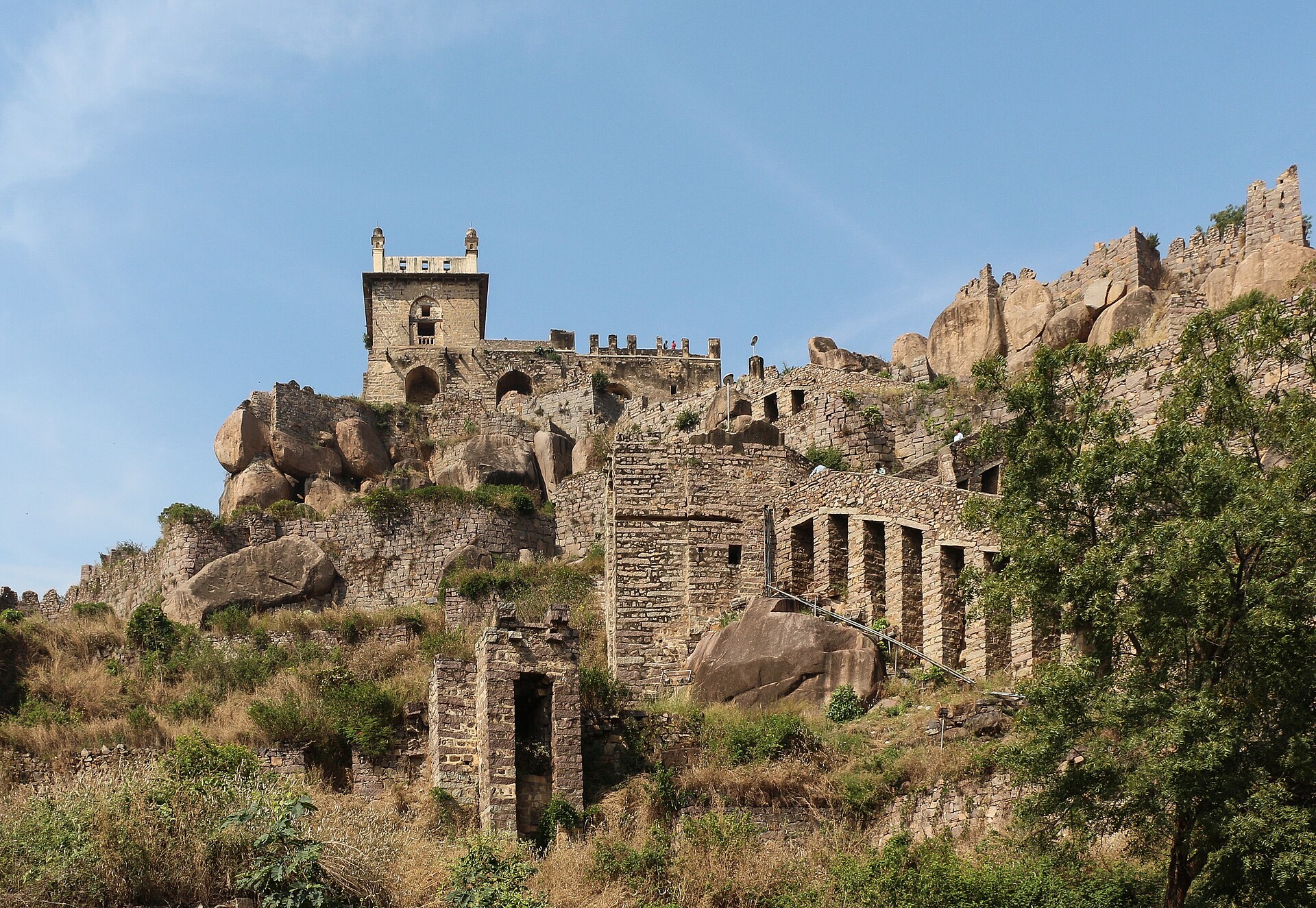
Golconda: the fortress that climbs a hill of granite, the Baradari at its summit. Seat of the Qutb Shahi sultans, treasury of the world's diamonds, for two centuries one of the wealthiest capitals on earth.
Photo: Bernard Gagnon · CC BY-SA 3.0 · Wikimedia Commons
Three dynasties above all others shaped what Telangana is. The Kakatiyas gave it its irrigation, its temples and its martial pride. The Qutb Shahis gave it Hyderabad and its composite culture. The Asaf Jahis gave it two centuries of sophisticated governance and a city that ranked among the finest in Asia. Together they built the inheritance that was Telangana's on the day of the merger in 1956.
Chapter IRecord TL·I·03
Of all the kingdoms that rose from Telangana's soil across two and a half millennia, three stand above the rest not simply in duration or territory, but in the depth of their imprint on the land and its people. The Kakatiyas, who ruled for three and a half centuries from the fortress city of Warangal, built an irrigation civilisation so sophisticated that its tank network continued to function for seven centuries after their rule ended. The Qutb Shahis, who ruled from the diamond fortress of Golconda, founded one of the world's great cities and created a culture of extraordinary richness and plurality. And the Asaf Jahis, the Nizams of Hyderabad, who ruled for 224 years, built a state so modern and administratively advanced that it was already the fifth largest city in India when the merger came in 1956.
950 CE to 1323 CE · Three and a Half Centuries
The Kakatiyas
Warriors, builders, irrigators. The dynasty that made Warangal the heart of Telangana.
The Kakatiya dynasty arose around 950 CE as sub-feudatories of the Rashtrakutas and grew over three and a half centuries into one of the most powerful kingdoms of the Deccan. They ruled first from Hanumakonda and then from Warangal, building a kingdom that at its height united all Telugu-speaking lands under a single administration for the first time in history. They are remembered not only for their military prowess but for their vision of a society built around water, stone and the welfare of their people.
The Tank Irrigation Civilisation
The Kakatiyas built a system of chain tanks perfectly engineered to suit Telangana's undulating terrain. Each tank was designed to overflow into the next, creating an interconnected irrigation network of extraordinary efficiency. At their height, 70,000 tanks irrigated 13 lakh acres of farmland. The system worked so well it continued to function for seven centuries after the dynasty ended.
The Sculptural Tradition
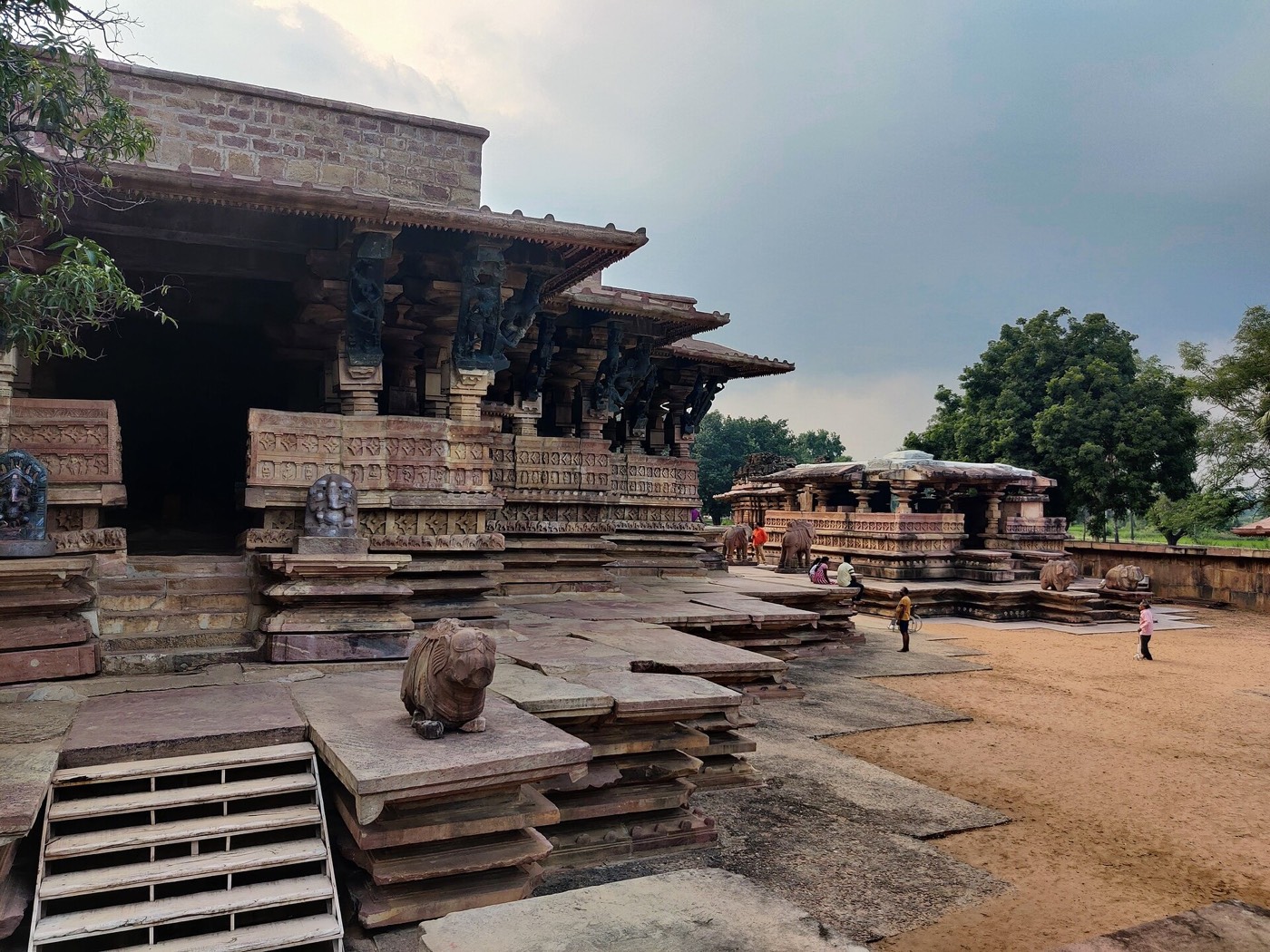
Kakatiya sculpture is among the finest in Indian art. The Ramappa temple at Palampet, a UNESCO World Heritage Site, was built in 1213 CE by General Recharla Rudra under King Ganapati Deva. Its floating bricks, which are so light they rest on water, its intricate bracket figures and its distinctive star-shaped platform make it one of the masterpieces of medieval Indian architecture.
Rudramadevi, The First Woman Ruler
Queen Rudramadevi of the Kakatiya dynasty is the first documented woman to have ruled a major kingdom in the Indian subcontinent as a sovereign in her own right, not as a regent. She ruled from approximately 1263 to 1289 CE, successfully defending the kingdom against rival powers and earning the admiration of Marco Polo, who visited the Kakatiya kingdom and recorded his impressions.
Perini Sivatandavam, Dance of Warriors
The Kakatiya period saw the evolution of Perini Sivatandavam, the dance of warriors, a powerful classical form performed by men as a martial offering before battle. Dedicated to Lord Shiva, it combines vigour, strength and devotion in a form that is uniquely and distinctly Telangana. The Kakatiyas gave this art the royal patronage that brought it to its highest form.
The Kakatiya kingdom saw powerful kings like Ganapatideva, Rudradeva and Prataparudra as well as the first ever woman ruler in the subcontinent, Rudramadevi. The Kakatiyas are known for their irrigation public works, sculpture and fine arts.
On the Kakatiya dynasty of Telangana
The Ramappa temple, Palampet, built 1213 CE by General Recharla Rudra under Ganapati Deva: floating bricks, star-shaped platform, and the finest sculpture of the Kakatiya age.
Photo: Khushi Shah 280 · CC BY-SA 4.0 · Wikimedia Commons
1496 CE to 1687 CE · Seven Sultans, 191 Years
The Qutb Shahis
Founders of Hyderabad. Builders of Golconda. Creators of a composite civilisation.
Sultan Quli Qutb Shah declared independence from the Bahmanis in 1496 with Golconda as his capital and founded a dynasty of seven sultans whose combined rule of 191 years produced one of the most remarkable civilisations in Indian history. They ruled not only Telangana but all Telugu-speaking lands, including parts of present-day Maharashtra and Karnataka. Under their patronage, Golconda became one of the wealthiest cities in the world, famous for its diamonds, its textiles and the extraordinary culture that grew from the meeting of Persian, Turkish, Telugu and Hindu traditions.
The Founding of Hyderabad, 1591
Muhammad Quli Qutb Shah founded Hyderabad on the banks of the Musi river in 1591, building the Charminar as the centrepiece of the new city. The Charminar, with its four minarets and its magnificent arches, remains one of the most recognised structures in India. The city was planned with four grand roads radiating from the Charminar, and the Mecca Masjid, one of the largest mosques in India, was begun in the same era.
Golconda, Diamond Capital of the World
The Golconda diamond mines were the world's only known source of diamonds for centuries. The most famous diamonds in history, including the Koh-i-Noor, the Hope Diamond, the Regent Diamond and the Nassak Diamond, all came from the Golconda mines of Telangana. The city of Golconda became synonymous with fabulous wealth, and the phrase "Golconda" entered multiple languages as a word meaning a source of great riches.
The Ganga-Jamuna Tehzeeb
The Qutb Shahis created what came to be known as the Ganga-Jamuna tehzeeb, the composite culture of Hindu and Muslim traditions that defined Hyderabad's character for centuries. Qawwali, Ghazals and Mushairas flourished under their patronage. Telugu literature and Persian poetry coexisted in the same court. Hindu festivals and Muslim observances were both celebrated with equal dignity. This pluralism became the defining character of Telangana's capital.
Golconda Fort, an Engineering Marvel
Golconda Fort, built and expanded by the Qutb Shahis, is an extraordinary feat of military architecture. Its acoustic system, by which a hand-clap at the main gate could be heard at the topmost pavilion, was one of the most sophisticated alarm systems of its era. The fort's water supply system, which brought water to the top of the hill through a complex of pipes and Persian wheels, was equally remarkable.
The Seven Qutb Shahi Sultans
Sultan Quli Qutb Shah, founder of the dynasty, ruled from Golconda from 1496. Declared independence from the Bahmanis and established Golconda as one of the great capitals of the Deccan.
Jamshid Quli Qutb Shah, expanded the kingdom and continued his father's architectural legacy.
Subhan Quli Qutb Shah, Jamshid's minor son, ruled briefly under his mother's guardianship, followed by his uncle Ibrahim Quli Qutb Shah.
Ibrahim Quli Qutb Shah, one of the greatest patrons of Telugu literature, himself a poet in Telugu and Persian.
Muhammad Quli Qutb Shah, founder of Hyderabad in 1591, builder of the Charminar, one of the most culturally accomplished rulers in Indian history.
Muhammad Qutb Shah and Abdullah Qutb Shah continued the dynasty, and Abul Hasan Qutb Shah (Tana Shah, remembered as the patron of the Bhadrachalam Rama temple) was its last sultan, ruling until the Mughal conquest of 1687 brought the Qutb Shahi era to its end.
The Diamonds of Golconda
The Koh-i-Noor. The Hope Diamond. The Regent Diamond. The Nassak Diamond. The Orlov Diamond. Every one of the world's most famous diamonds came from the mines of Golconda, Telangana. For centuries, Golconda was the only known source of diamonds in the world. The wealth they generated made the Qutb Shahi kingdom one of the richest in Asia and gave Hyderabad its legendary status as a city of unimaginable riches.
1724 CE to 1948 CE · Seven Nizams, 224 Years
The Asaf Jahis
The Nizams of Hyderabad. Two centuries of governance that built a modern state.
In 1724, Qamar-ud-din Khan, Nizam-ul-Mulk, reclaimed the Deccan suba and established the Asaf Jahi dynasty, naming the region Hyderabad Deccan. Over 224 years and seven Nizams, Hyderabad became one of the most sophisticated princely states in Asia, with its own currency, railway system, postal service, radio station, airline, universities and hospitals. By the time India became independent in 1947, Hyderabad was already the fifth largest city in India, with infrastructure that many Indian states that existed far longer could not match.
I
Nizam-ul-Mulk, Asaf Jah I
Mir Qamar-ud-din Khan, Founder of the dynasty, 1724 to 1748
II
Nizam-ul-Mulk, Asaf Jah II
Mir Nizam Ali Khan, 1762 to 1803. Moved the formal capital to Hyderabad in 1769.
III
Sikander Jah, Asaf Jah III
Mir Akbar Ali Khan, 1803 to 1829
IV
Nasir-ud-Daula, Asaf Jah IV
Mir Farqunda Ali Khan, 1829 to 1857
V
Afzal-ud-Daula, Asaf Jah V
Mir Tahniyath Ali Khan, 1857 to 1869
VI
Asaf Jah VI
Mir Mahbub Ali Khan, 1869 to 1911. Beloved by his people for his generosity and accessibility.
VII
Asaf Jah VII
Mir Osman Ali Khan, 1911 to 1948. Last Nizam. Donated his entire gold and currency reserves to India during World War II. Once described as the world's richest man.
Osmania University, 1918
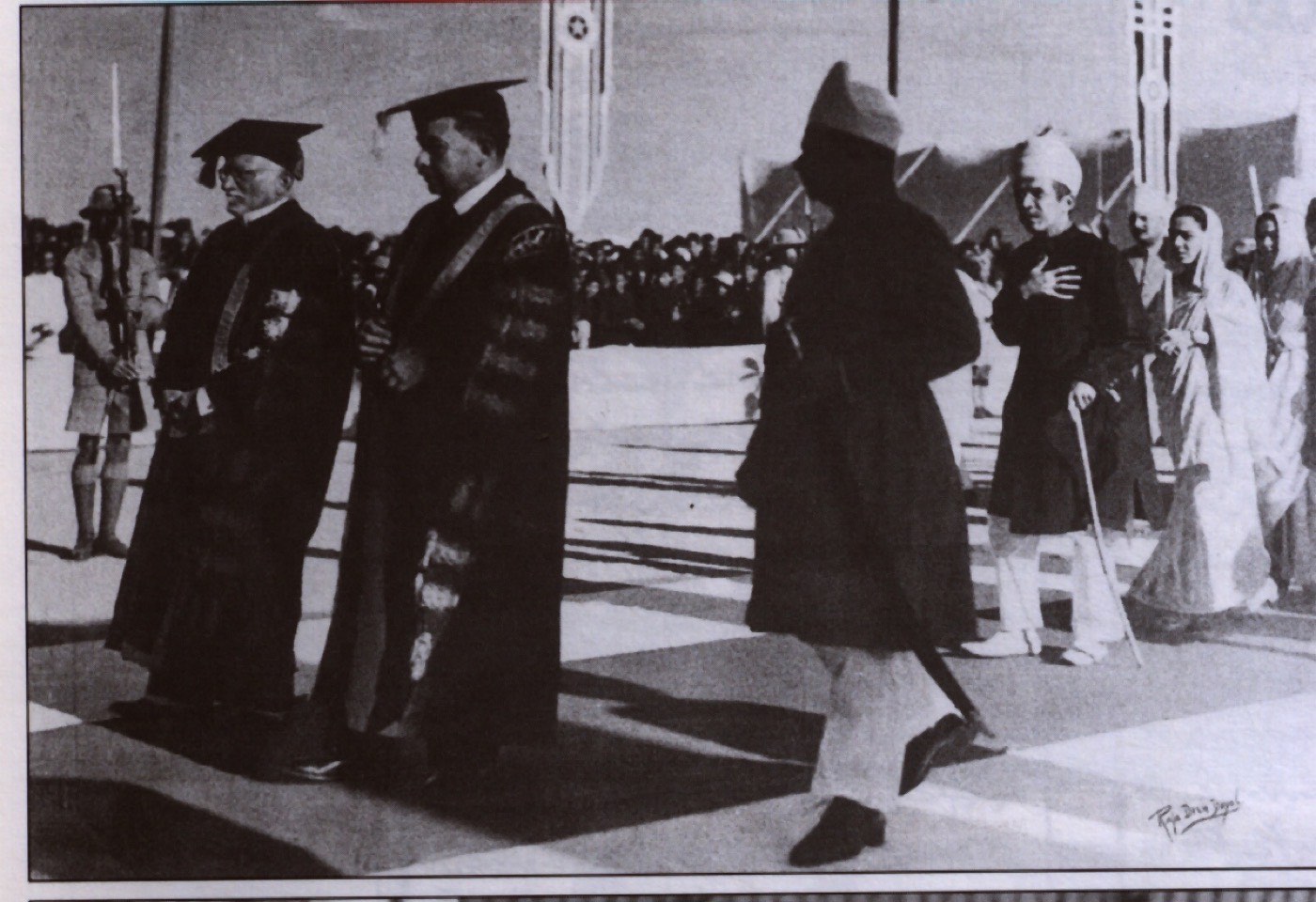
Established in 1918 by the seventh Nizam, Osmania University was the first in India to use an Indian language, Urdu, as its medium of instruction. Its colleges of medicine, engineering, arts and sciences produced generations of Telangana's educated class. The university's iconic Arts College building remains one of the finest examples of Indo-Saracenic architecture in India.
A Complete Healthcare System
The Nizams built a healthcare system of extraordinary comprehensiveness: Osmania Hospital, Gandhi Hospital, Nilofer Hospital for women and children, Cancer Hospital, ENT Hospital, Hospital for Chest Diseases, Hospital for Mental Diseases, NIMS, and Ayurvedic, Unani and Homeopathic hospitals. All were functional and fully equipped when the merger came in 1956.
Hyderabad's Electricity, 1910
The Hyderabad State Electricity Department was established in 1910, forty-three years before the Andhra state was even created. Street electrification began in 1913. By the end of the First World War, Hyderabad had 12 main and feeder lines, 50 substations and 3,238 consumers. It was described as one of the best illuminated cities in India, a distinction earned entirely under Nizam administration.
A City Ready to Lead
When Hyderabad State joined India in 1948, it brought with it the Raj Bhavan, the Legislative Assembly, the Secretariat, the High Court, fully furnished residential accommodation for all categories of officials, a protected water supply, an underground drainage system, the Nampally and Kachiguda railway stations, Begumpet Airport, the Road Transport Corporation and the Public Gardens. All built. All working. All Telangana's.
The Hyderabad State Electricity Department was established in 1910. Electricity reached the Nizam's palace in 1909. Street electrification began in October 1913. By the end of the First World War, Hyderabad had 12 main and feeder lines, 50 substations and 3,238 consumers. It was one of the best illuminated cities in India.
On the Nizam's Hyderabad, the city Telangana brought to the merger in 1956
A 1937 photograph: the Vice-Chancellor's procession at the inauguration of the Arts College building, Osmania University: the first university in India to teach in an Indian language.
Photo: Raja Deen Dayal studio, via Nayeem · Public domain · Wikimedia Commons
When Operation Polo was conducted on 17 September 1948, bringing Hyderabad State into the Indian Union, Telangana did not come to India empty-handed. It came with a city that had been built over three and a half centuries by the Qutb Shahis and the Asaf Jahis, with a healthcare system, a university, an electricity network, an airport, a railway system and a legal and administrative infrastructure that was among the finest in the country. That was Telangana's inheritance. That was what the Kakatiyas, the Qutb Shahis and the Nizams together had built. It remains, to this day, the greatest measure of what this land and its rulers were capable of.