The city of Hyderabad occupies a unique position in Telangana's history and in the argument for statehood. It is simultaneously Telangana's greatest inheritance, the primary prize Andhra sought from the merger of 1956, the city whose revenues were largely credited to Telangana while its development was used to argue that Andhra had contributed to the region, and the capital whose status as a joint city was proposed after bifurcation as a way of denying Telangana its own complete and undivided capital.
Understanding the capital city argument requires understanding what Hyderabad actually was in 1956, who built it, who funded its post-merger development, and what the financial records show about who paid for what. Once those questions are answered from the documentary record, the argument that Andhra has a claim to Hyderabad equivalent to Telangana's collapses entirely.
What Hyderabad Was in 1956
On the eve of the merger on 1 November 1956, Hyderabad was not a small administrative town awaiting development. It was already the fifth largest city in India, with a comprehensive infrastructure built over four to five centuries by the Qutubshahi and Asafjahi dynasties, and by the generations of Telangana's people who lived, worked and paid taxes under them.
Government Infrastructure
The Raj Bhavan, Legislative Assembly, Legislative Council, Secretariat, High Court, offices of all Heads of Departments, residential accommodation for judges, ministers, legislators, officers and government employees. All built, all functional, all belonging to Telangana's inheritance.
Healthcare Institutions
Osmania Hospital, Gandhi Hospital, Nilofer Hospital, Cancer Hospital, ENT Hospital, Maternity Hospital, Hospital for Chest Diseases, Hospital for Mental Diseases, NIMS, Ayurvedic Hospital, Unani Hospital, Homeopathic Hospital. A complete healthcare system built before the merger.
Educational Institutions
Osmania University, Nizam's College, Women's College, Saifabad College, Secunderabad College, City College, Osmania Medical College, Gandhi Medical College, Ayurvedic, Unani, Homeopathic and Dental Medical Colleges, College of Physical Education, numerous Government High Schools.
Civic Infrastructure
Protected water supply round the clock, underground drainage system, shopping complexes at Abids, Pattarghatti and Sultan Bazaar, well-maintained cement and black top roads, Secunderabad Railway Station, Nampally Station, Kachiguda Station, Begumpet Airport, Road Transport Corporation.
Cultural Heritage
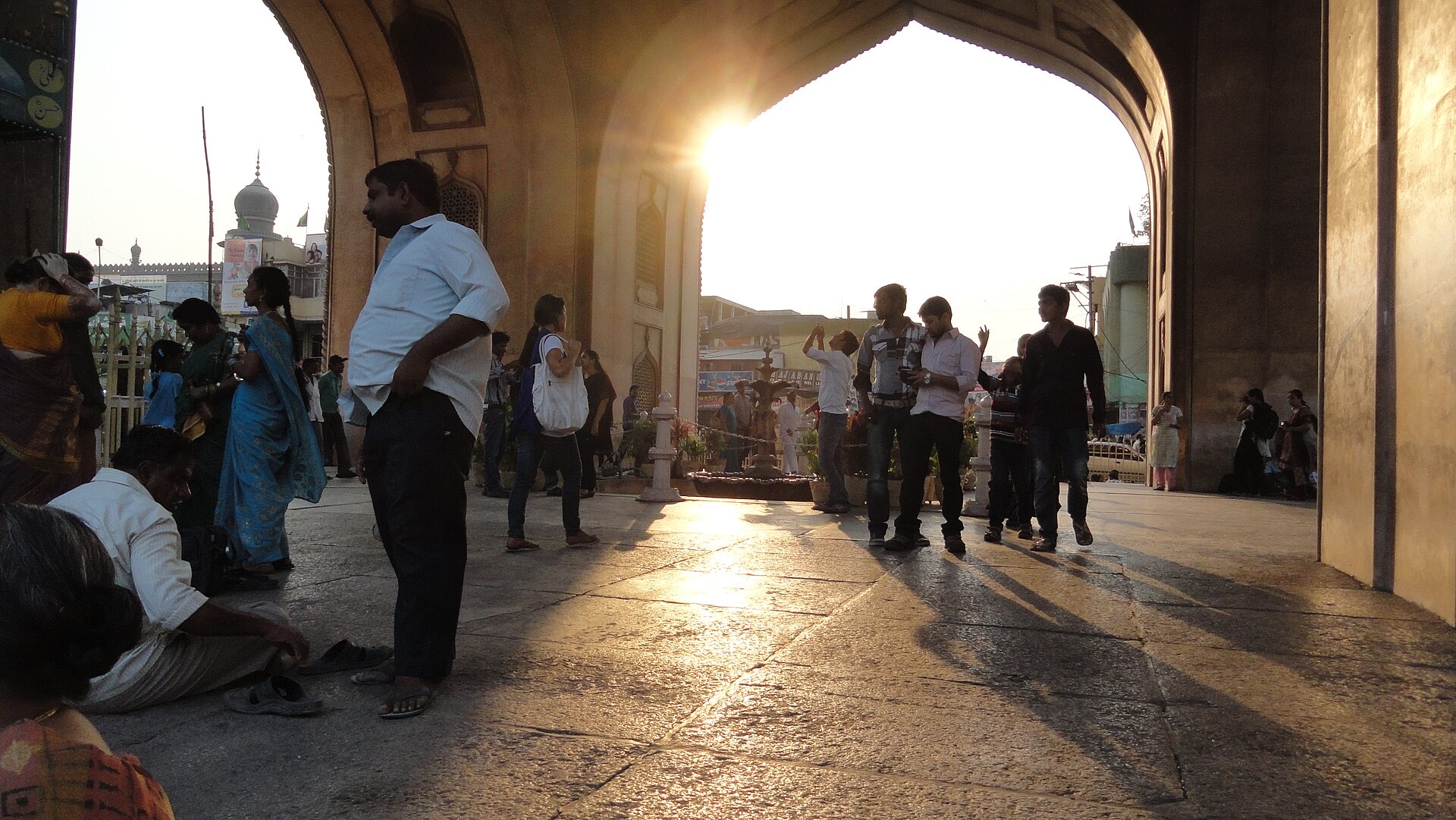
Public Gardens, Tank Bund, Gandipet, Golconda Fort, Mecca Masjid, Charminar, Qutubshahi Tombs, the Salarjung Museum and a large number of historic palaces. The cultural patrimony of five centuries of Telangana's rulers and people.
Status in 1956
Fifth largest city in India. Well illuminated, well connected, comprehensively governed. Described by Dr. B.R. Ambedkar in contrast to the Andhra state which had no capital: "Andhra is Sahara and there are no oases in it." Hyderabad was the oasis. It was Telangana's.
What Andhra Had: Nothing
The contrast between what Telangana brought to the merger in 1956 and what Andhra brought could not have been starker. Andhra had been formed in 1953 with Kurnool as a temporary capital and had spent three years unable to solve even its most basic administrative problems. Its own Chief Minister had admitted the state could not pay teachers' salaries. Its own press had surveyed every city and found none suitable for a capital.
The new Andhra State has no fixed capital. I might incidentally say that I have never heard of the creation of a state without a capital. Andhra is Sahara and there are no oases in it.
Dr. B.R. Ambedkar, Writings and SpeechesAndhra's own politicians were explicit about what they wanted from Hyderabad. Tanguturi Prakasam, former Chief Minister of Andhra, said in 1953: "All our troubles will be resolved if we get Hyderabad." Neelam Sanjeeva Reddy told the Andhra assembly that "people are enthusiastically waiting for moving to Hyderabad." Andhra Patrika's survey of possible capitals concluded with a single entry: "Hyderabad: the one and the only way out."
This is the context in which the merger happened. Andhra needed Hyderabad. Telangana had Hyderabad. The merger transferred Hyderabad to a state government where Andhra's numerical majority held decisive power. Telangana received, in exchange, the Gentlemen's Agreement, whose provisions were violated from the first day.
Who Funded Hyderabad's Development After 1956
A section of Andhra's political and business leadership has argued that the post-merger development of Hyderabad was funded by Andhra's investment and enterprise, and that this gives Andhra a legitimate claim to the city. The financial records of the state government comprehensively refute this argument.
The Industrial Inheritance That Was Destroyed
Far from developing Telangana's industrial base, the integrated state systematically allowed the major industries inherited from the Hyderabad state to close down, be sold off or be starved of investment. The record of industrial destruction in Telangana after 1956 is as well-documented as the revenue diversion.
Industries Inherited From Hyderabad State, Lost After Merger
- Azamjahi Mills, Warangal, the largest textile mill in Asia at the time. Closed down.
- Nizam's Sugar Factory, Bodhan, the largest sugar mill in Asia at the time. Sold to Andhra investors at a throwaway price.
- Sirsilk Factory, Sirpur. Abandoned.
- Spinning Mills of Antargaon. Abandoned.
- DBR Mills. Abandoned.
- Allwyn Factory, Hyderabad. Abandoned.
- Republic Forge. Abandoned.
- Glass Factory. Abandoned.
- Fertiliser Factory, Ramagundem. Liquidated.
- IDPL, Hyderabad. Liquidated.
- Employment at Singareni Collieries pruned year after year despite coal production being entirely from Telangana.
While Telangana's inherited industries were being closed and sold, new industries were being established in Andhra's cities. No major industry worth its name was set up in any of the districts of Telangana region during the integrated state's history, while several were established in Visakhapatnam, Vijayawada, Kakinada, Nellore, Tirupathi, Kadapa and Kurnool.
The industrial development that did take place in and around Hyderabad benefited Telangana's land, water and power infrastructure but not Telangana's people. The migrants from Andhra who came to work in and around the capital were given more than 95% of the jobs in these establishments, documented in the state's own employment census data.
The Joint Capital Proposal: A Final Attempt to Hold On
When bifurcation became inevitable after 2009, a section of Andhra's leadership proposed that Hyderabad be made either a joint capital or a Union Territory, separate from both successor states. The argument was that Andhra's investment in the city entitled Andhra to continued access to it as a capital even after separation.
This argument fails on every factual, logical and practical ground. The financial records show it was Telangana's revenues that funded state expenditure including in the capital city. The historical record shows Hyderabad was built by Telangana's people and rulers over five centuries. And the practical question is equally simple: how would a common man from Andhra reach a capital city that is not within the territory of his own state, with no corridor connecting them?
What is the purpose of a capital city? Is it for the convenience of the people or comforts of the political elite or profits of the businessmen? If the primary objective is to ensure the convenience of the people, how will a common man from Andhra come to the capital city, situated outside the territory of his own state?
On the proposal to make Hyderabad a joint capital after bifurcationWhen Telangana state was formed on 2 June 2014, Hyderabad was designated as its capital with a ten-year transition period during which it would also serve as the capital of the residual Andhra Pradesh. That transition period was a political accommodation, not an acknowledgement of Andhra's ownership. Hyderabad is, has always been, and remains the heart of Telangana. It was built by Telangana's people. It was taken by Andhra's political pressure. It was returned, with statehood, to where it had always belonged.