Employment in government service was, for decades, the primary route to economic security and social mobility for Telangana's educated youth. A government job meant a regular salary, a pension, and a position of some standing in the community. To be systematically excluded from those jobs in your own home region, to watch positions that should have been yours filled by people from another region in violation of law, was not merely an economic injury. It was a daily reminder of second-class status in your own homeland.
The exclusion of Telangana's people from government employment was not a matter of incompetence or neglect. It was systematic, sustained across every government that ruled Andhra Pradesh, and confirmed by multiple committees appointed by the governments of the state and the Centre. It began from the very first day of the merger and continued for fifty-three years, until statehood in 2014 finally gave Telangana the power to govern its own public services.
The Framework That Was Supposed to Protect Telangana
The employment protections for Telangana's people were not an afterthought. They were built into the very conditions under which the merger took place. The Mulki Rules, which predated the merger, reserved government employment and educational opportunities in the Hyderabad state's Telangana region for local residents. The Gentlemen's Agreement of 1956 reaffirmed this protection. The Presidential Order of 1975, issued under Article 371(D) of the Constitution of India, gave the protection constitutional authority, specifying that government posts in Telangana must be filled by local candidates.
Each layer of protection was violated as thoroughly as the one before it. And in one extraordinary case, the protection was so inconvenient for Andhra's political majority that Parliament itself was used to nullify a Supreme Court judgment upholding Telangana's rights.
The 2006 Employee Census: What the Numbers Show
The 6th Census of State Government and Public Sector Employees, published on 11 February 2008 based on data as of 31 March 2006, provided the most comprehensive official picture of the employment situation in Andhra Pradesh. Its findings were stark.
6th Employee Census, 2006, Key Findings
The asymmetry in these numbers is total. 40% of employees working in Telangana were non-locals placed there in violation of constitutional protections. Less than 1% of employees in Andhra were from Telangana. Of the 57,899 gazetted officers in the entire state, only 10 to 12% were from Telangana, against a population entitlement of 40.69%. In the Hyderabad capital offices, including the Secretariat and Heads of Departments, 90% of employees were from Andhra.
Non-Local Employees in Telangana: Cumulative Violations Over Time
| Period | Estimated Non-Local Employees | Violation Of |
|---|---|---|
| 1956 to 1968 | 22,000 | Mulki Rules |
| 1975 to 1985 | 58,962 | Presidential Order 1975 |
| Cumulative by 2005 | Estimated 2.5 lakh | Mulki Rules and Presidential Order combined |
Source: Findings of the One Man Commission, constituted by the Government of AP, and analysis by Telangana Employees Associations based on official data.
The Secretariat and Heads of Departments: Total Exclusion
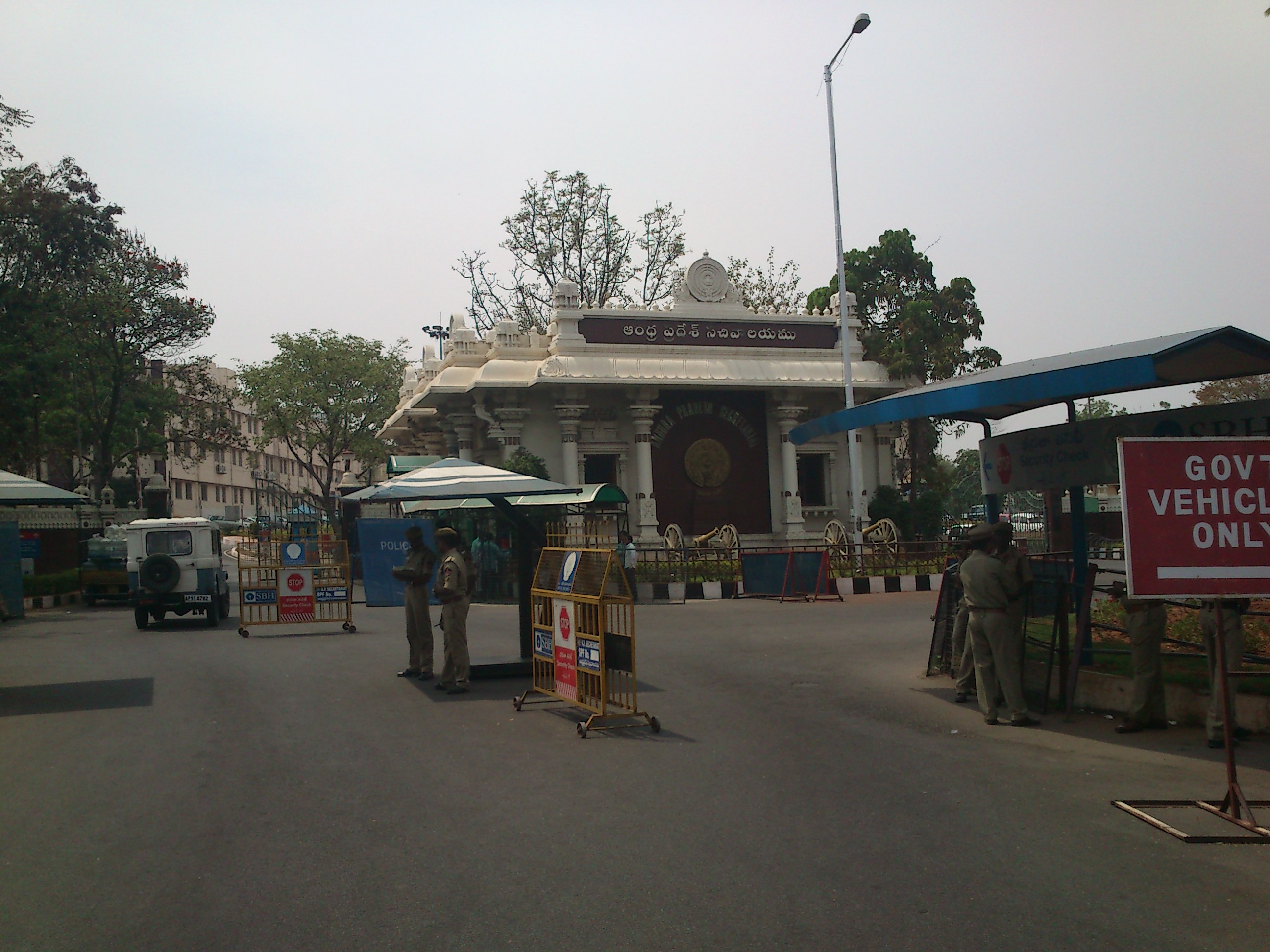
The situation in the Secretariat and Heads of Departments, the nerve centre of the state's administration, was particularly stark. With 90% of employees in Hyderabad's capital offices from Andhra, Telangana had virtually no presence in the institutions that made the decisions about how the state's resources were allocated. This structural exclusion from decision-making meant that every policy question, whether about irrigation project funding, education grants, employment allocation or revenue budgeting, was decided by an administration dominated by people from Andhra, with Telangana having only marginal representation.
Since 90% Heads of Departments and Higher Officers of the Government belong to the Andhra Region, the said officers intentionally neglected to implement the instructions and Government orders issued for repatriation of non-locals employees. Due to insignificant representation in the Secretariat and Heads of Departments, discrimination and injustice is meted out to Telangana in every sphere of life.
On the structural exclusion of Telangana from the state's administrationNehru's Own Warning, Revisited
When Jawaharlal Nehru announced the merger at Nizamabad on 5 March 1956, he had said clearly: "If the Telangana people suffer injustice at the hands of Andhras then they will have a right to seek separation." And on 1 November 1956, the day the state was formed, he had added: "Andhra people are on trial and the unity of the new State depends on how fairly they treat the people of Telangana."
The employment record of the integrated state is one answer to those statements. In 53 years, Andhra Pradesh's government systematically excluded Telangana's people from government jobs in their own region, using legal protections as paper to be violated and constitutional orders as obstacles to be stayed in court. The trial Nehru described had a clear verdict. The right to seek separation that he had acknowledged was exercised, through democratic means, through agitation, through hunger strikes and through the ballot box, until statehood finally arrived in 2014.
The Sequence of Protections and Their Violation
- Mulki Rules, predating the merger, reserving Telangana posts for locals. Violated from Day One of the merged state.
- Gentlemen's Agreement 1956, reaffirming employment protections. Violated from Day One.
- All Party Accord 1969, promising to address employment grievances. Shelved within six months.
- Supreme Court judgment 1972, validating Mulki Rules. Annulled by Parliament in 1973.
- Six Point Formula 1973, a diluted replacement for Mulki Rules. Violated continuously.
- Presidential Order 1975 under Article 371(D), giving constitutional backing to local reservations. Violated for 34 years by state recruitment agencies.
- GO 610 of December 1985, ordering repatriation of some 60,000 illegally appointed non-locals. Kept under "active consideration" for 25 years across seven Chief Ministers. Never implemented.
- Repatriation orders 2006 to 2009, directing non-local employees to return to their home regions. All stayed by tribunals and courts. Government did not pursue vacation of stays.
- Result: An estimated 2.5 lakh employment opportunities lost. 40% non-local presence in Telangana's government workforce. 10 to 12% Telangana share of gazetted officers.