The road from the Sri Krishna Committee's report in December 2010 to Parliament's vote in February 2014 was another four years of political deliberation, internal Congress party debate, Andhra opposition and Telangana impatience. The committee itself had not given an unambiguous recommendation for a separate state, offering instead multiple options including bifurcation as one of six possible solutions. But the political momentum, built over decades of struggle and crystallised by the events of 2009, was by this point irreversible.
The Congress party's decision to proceed with bifurcation was driven by a calculation that the Telangana electorate, which it had repeatedly promised and repeatedly disappointed, needed to be given what it had been promised before the 2014 general elections. Whether that calculation was motivated by genuine commitment or electoral pragmatism was debated. What was not debated was the result: the Andhra Pradesh Reorganisation Bill was introduced, debated in chaotic and contested sessions, and finally passed by both houses of Parliament.
The Sri Krishna Committee: 2010
The Committee for Consultations on the Situation in Andhra Pradesh, headed by Justice B.N. Srikrishna, was constituted on 3 February 2010 following the events of December 2009. It received submissions from all political parties, civil society organisations, academic institutions and individual citizens with a stake in the question. The TRS submission, signed by KCR and running to four volumes, was among the most comprehensive documents placed before the committee.
The committee submitted its report in December 2010. It offered six possible options for resolution of the Andhra Pradesh situation, ranging from maintaining the status quo to full bifurcation into Telangana and Seemandhra states. It did not make a single clear recommendation for bifurcation. But the political process that followed effectively treated bifurcation as the direction in which the government was moving, and the committee's work provided the analytical foundation on which the reorganisation bill was eventually drafted.
The Long Road to the Bill
From Sri Krishna Committee to Parliamentary Vote, 2010 to 2014
- December 2010: Sri Krishna Committee submits report offering six options including bifurcation. No single clear recommendation.
- 2011 to 2012: Congress party internal deliberations on which option to pursue. Andhra Congress leaders resist bifurcation. Telangana Congress leaders press for it. Stalemate continues.
- 2013: Congress Working Committee finally endorses bifurcation in principle. This is the decisive internal party commitment that sets the legislative process in motion.
- October 2013: Cabinet sub-committee on Telangana approves the draft Andhra Pradesh Reorganisation Bill. The legislative process formally begins.
- December 2013: The Union Cabinet approves the Andhra Pradesh Reorganisation Bill. Andhra Pradesh Assembly debates the bill in a chaotic session where Andhra members pepper spray the chamber and attempt to disrupt proceedings.
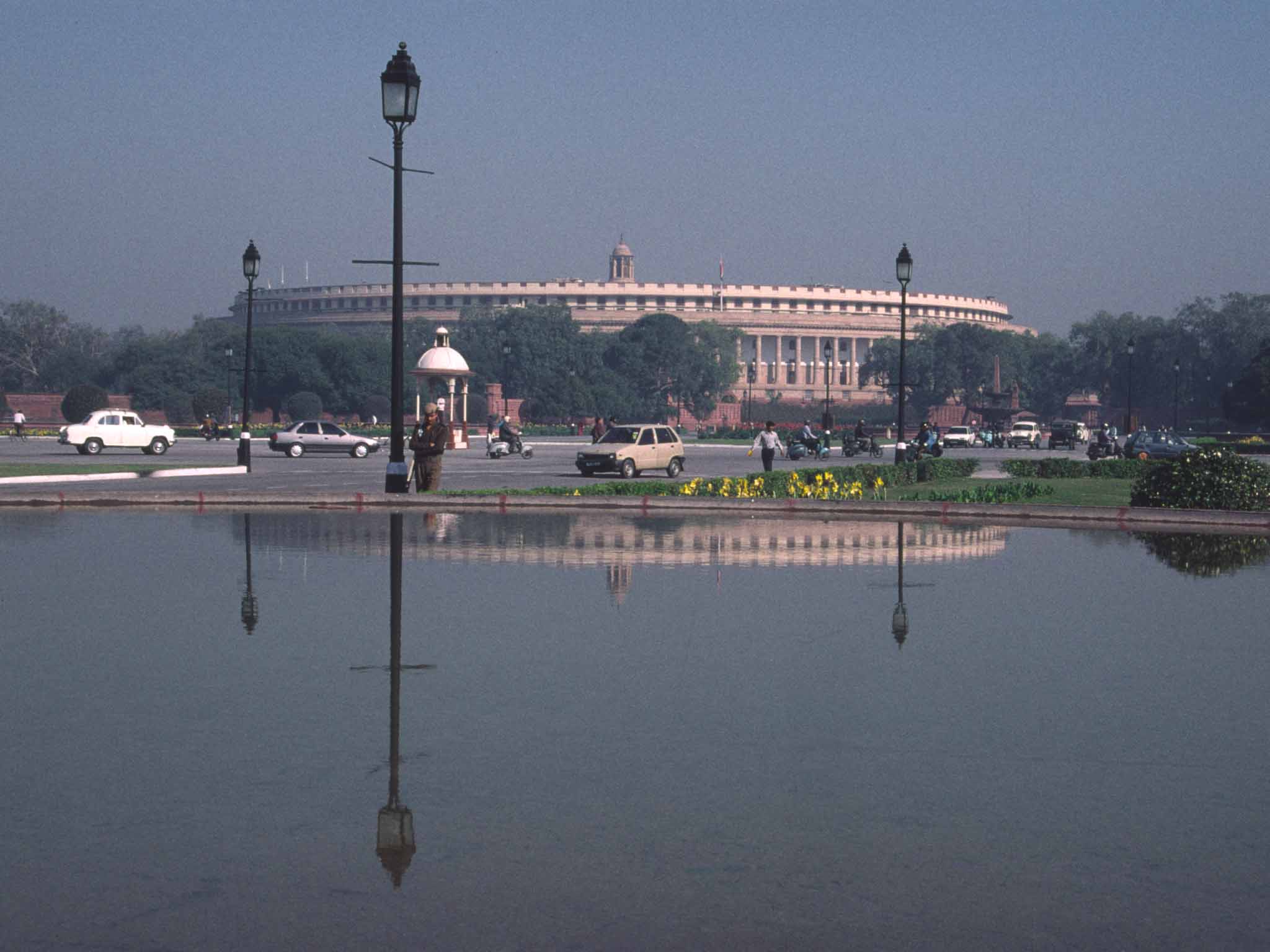
- 18 February 2014: Lok Sabha passes the Andhra Pradesh Reorganisation Bill amid uproar from Andhra and Rayalaseema members.
- 20 February 2014: Rajya Sabha passes the bill. Both houses of Parliament have now given their constitutional sanction.
- 1 March 2014: President Pranab Mukherjee gives his assent to the bill. The Andhra Pradesh Reorganisation Act 2014 becomes law.
- 2 June 2014: The appointed date. Telangana becomes the 29th state of India.
What the Vote Meant
The Constitutional Significance
The parliamentary vote was not merely a political event. It was the constitutional culmination of a demand that had been made before the merger in 1956, that the States Reorganisation Commission had recommended in 1955, that Nehru had acknowledged was conditional and potentially reversible, that hundreds had died for in 1969, that the Supreme Court had protected and Parliament had then stripped away, that formula after formula had promised and violated, and that the people of Telangana had sustained through six decades of agitation, suppression, broken promises and renewed struggle. When Parliament voted in February 2014, it was giving constitutional recognition to what history, evidence and democratic mandate had demanded for fifty-eight years.
The Restoration of Status Quo Ante
One of the most important conceptual points made by KCR in the TRS submission to the Sri Krishna Committee was that the formation of Telangana state was not a demand for something new. It was a demand for the restoration of status quo ante, the situation as it existed on 31 October 1956, the day before the forced merger.
What is to be understood is that the formation of Telangana State means restoration of status quo ante as it existed on 31st October 1956. The geographical boundaries and the territorial jurisdiction of the two regions were clearly demarcated and defined in the documents prepared at the time of merger of Telangana with Andhra. No new exercise is required on this score.
K. Chandrasekhar Rao, TRS submission to Sri Krishna Committee, 2010This framing was constitutionally and historically precise. Telangana was not asking for new territory or new rights. It was asking to have restored what it had before 1956: its own state, its own government, its own revenues, its own water rights and its own administrative identity. The parliamentary vote of February 2014 was the acknowledgement by the Indian state that what had been taken from Telangana in 1956 through manipulative politics could and should be restored through democratic constitutional process.
Between the merger of 1 November 1956 and the parliamentary vote of February 2014, 57 years and three months had passed. The demand had been voiced before the merger, suppressed during it, agitated for across every decade of it, documented comprehensively in the TRS submission of 2010, and finally answered by Parliament in 2014. One page remained to be written: the appointed date of 2 June 2014, when Telangana would actually come into existence as the 29th state of India.