The formation of Andhra Pradesh on 1 November 1956 was not the beginning of a story. It was the culmination of three years of relentless political pressure applied by Andhra's leadership against the clear recommendation of the country's own States Reorganisation Commission, against the expressed reluctance of the Prime Minister, and against the wishes of Telangana's people. Understanding how the merger happened, who pushed for it and what arguments were made and rejected, is essential to understanding why the demand for a separate Telangana never died in the decades that followed.
The road to 1 November 1956 was built from broken logic, political pressure and the willingness of a national leadership to sacrifice the interests of a smaller, less powerful region in order to resolve the inconvenient problems of a larger one. It is a road whose every milestone is documented in the records of the time.
The Road to 1 November: A Timeline of Pressure
From Andhra's Creation to Telangana's Absorption, 1953 to 1956
Nehru's Warning, Spoken at the Moment of Merger
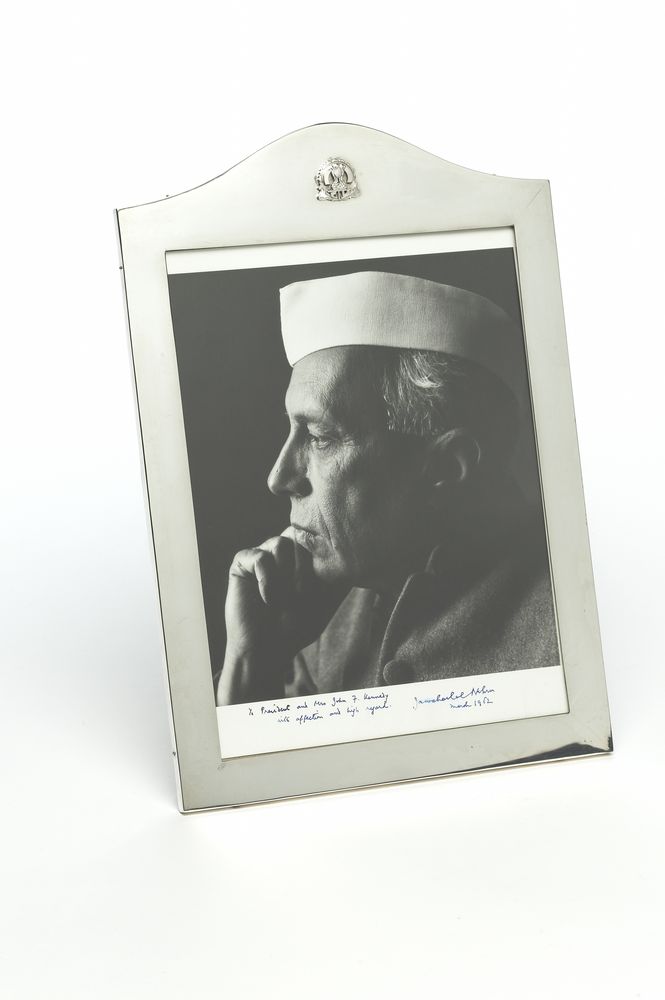
Even as Andhra Pradesh was being formed, those in power knew the risks. Jawaharlal Nehru, who had been pushed into accepting the merger against his better judgement, did not pretend the arrangement was ideal. When he announced the merger on 5 March 1956 at Nizamabad, he issued a clear warning to Andhra's political leadership. The statement is on record.
If the Telangana people suffer injustice at the hands of Andhras then they will have a right to seek separation.
Jawaharlal Nehru, announcing the merger at Nizamabad, 5 March 1956And on 1 November 1956 itself, speaking in Hyderabad on the day the state was formed, Nehru was equally direct:
Andhra people are on trial and the unity of the new State depends on how fairly they treat the people of Telangana.
Jawaharlal Nehru, Hyderabad, 1 November 1956These were not ceremonial pleasantries. They were conditional statements. Nehru was telling Andhra's leaders that the merger carried with it an obligation, not just a benefit, and that failure to honour that obligation would justify separation. Within months, those obligations were being violated. Within thirteen years, a massive uprising had erupted. Within 58 years, the separation Nehru had implicitly sanctioned had finally come to pass.
What the Merger Actually Delivered to Andhra
For Andhra, the merger delivered precisely what its leaders had sought. Hyderabad became the capital of Andhra Pradesh, solving at a stroke the problem that Andhra's leaders had described as their most urgent crisis. The financial surplus of Telangana, which had been identified by the SRC as the region's chief economic strength, began flowing toward Andhra's development. The waters of the Krishna and Godavari, over whose allocation Telangana had feared it would lose independent rights, now came under the control of a state government in which Andhra's numerical majority exercised decisive power.
What the Merger Delivered: Andhra's Gains, Telangana's Losses
- Hyderabad, built over centuries by Telangana's rulers and people, became the capital of Andhra Pradesh at no cost to Andhra. The fifth largest city in India, with all its infrastructure, passed to Andhra's administration.
- Telangana's revenue surpluses, which the SRC had identified as the region's financial strength, began being diverted to meet Andhra's chronic deficit. Within the first five months, 41.07% of Telangana's revenues were transferred to Andhra.
- The two major irrigation barrages in Andhra, dilapidated and unfunded at the time of merger, were renovated and expanded using resources from the combined state, now including Telangana's surplus revenues. Together they irrigate more than 25 lakh acres in Andhra.
- Singareni coal, mined entirely from Telangana, fuelled Andhra's power generation. Telangana received a disproportionately small share of the power produced.
- Industrial enterprises inherited from the Hyderabad State, including the Azamjahi Mills in Warangal, the Nizam's Sugar Factory in Bodhan and several other major units, were progressively shut down, sold or allowed to collapse.
- Government employment across the state was dominated by personnel from Andhra. By 2006, an estimated 40% of employees working in Telangana's government departments were non-locals, violating both the Gentlemen's Agreement and the Presidential Order of 1975.
The Merger's Defining Character: Conditional, Not Eternal
One of the most important and consistently ignored facts about the merger of 1956 is that it was explicitly framed as conditional and not permanent. This was not a retrospective argument made by Telangana's advocates to justify the demand for separation. It was stated by the highest authority at the time of the merger itself.
Nehru's divorce analogy was not casual language. It reflected the understanding of everyone involved that the merger carried conditions and that failure to meet those conditions would justify undoing it. The Gentlemen's Agreement itself was a conditional document: if its terms were honoured, the merger would work; if they were violated, the basis for the merger would be undermined.
The SRC had further reinforced this conditionality in Para 388: if public sentiment in Telangana crystallised against unification, Telangana would have to continue as a separate unit. The Commission had not said this would be a failure. It had said it would simply be the appropriate outcome.
What is to be understood is that the formation of Telangana State means restoration of status quo ante as it existed on 31st October 1956. The geographical boundaries and the territorial jurisdiction of the two regions were clearly demarcated and defined in the documents prepared at the time of merger of Telangana with Andhra. No new exercise is required on this score.
TRS submission to the Sri Krishna Committee, 2010The demand for Telangana statehood was not a demand for something new. It was a demand for the restoration of what had existed before 1 November 1956: a separate Telangana, with its own government, its own revenues, its own water rights and its own future. Everything that the SRC had recommended in 1955 and that the merger had taken away in 1956.
The Beginning of the Long Struggle
The merger of 1956 did not end Telangana's story. It began the longest and most consequential chapter of it. From 1 November 1956 forward, the people of Telangana lived in a state where their revenues were diverted, their water was denied, their employment was taken by outsiders, their political leadership was marginalised and their cultural identity was belittled. The fear that had driven their opposition to Visalandhra was not a fear born of prejudice. It was a prediction that proved accurate in every particular.
Within thirteen years of the merger, in 1968 and 1969, the Jai Telangana movement erupted. About 369 people, most of them students, were killed in the state government's crackdown. The movement was suppressed. The exploitation continued. And the demand for a separate state, which had existed before the merger, intensified after it, persisting through every decade until statehood finally arrived on 2 June 2014.
The merger of 1956 was an act of manipulative politics, dressed in the language of linguistic unity, secured by promises that were broken immediately and imposed on a people who had never consented to it. Its consequences lasted 58 years. Its correction, when it finally came, was called statehood. Telangana's people called it home.