When the history of Visalandhra is told from Andhra's perspective, it is told as a story of Telugu pride, linguistic unity and the natural coming together of people who shared a language and a culture. That story has the advantage of being emotionally resonant. It has the disadvantage of being demonstrably false, contradicted by Andhra's own politicians, Andhra's own press and the records of Andhra's own legislative assembly in the years from 1953 to 1956.
The real story of what Andhra wanted from the merger with Telangana is not a secret. It was stated openly, repeatedly and on the record. Andhra wanted three things, none of which had anything to do with cultural unity or linguistic solidarity. It wanted a capital city. It wanted financial rescue. And it wanted control over the rivers that flowed through Telangana on their way to the sea.
Three Things, Documented and Undeniable
The Capital City: Andhra's Most Urgent Problem
When the Andhra state was carved out of Madras in October 1953, it had no proper capital. Kurnool was chosen as a temporary arrangement, but every political leader in Andhra admitted it was wholly unsuitable. Andhra Patrika, the leading Telugu daily of the time, conducted what amounted to a survey of every possible city and found all of them wanting.
Andhra's Capital Crisis in the Press and Assembly, 1953 to 1956
- Kadapa Koti Reddy, influential leader: "In the Andhra State there is no proper place to locate even district level offices; where is the question of finding place for locating offices for the capital city of the state?" (Andhra Patrika, 13 March 1953)
- Tanguturi Prakasam, former Chief Minister: "All our troubles will be resolved if we get Hyderabad. But how will we get it? We have to think as to how to work for it." (Andhra Patrika, 2 June 1953)
- Y. Suryanarayana Rao, Congress leader: "We have already spent one crore rupees on the capital city Kurnool. We are still spending. Even after spending so much, has Kurnool town got a shape suitable for a capital city? Absolutely not." (Andhra Patrika, 29 September 1954)
- Neelam Sanjeeva Reddy: "People are enthusiastically waiting for moving to Hyderabad. Nobody is feeling the pinch of shifting the state's capital from Kurnool." (Andhra Patrika, 9 August 1954)
- Andhra Patrika survey of cities: Visakhapatnam, no road on which two lorries can safely cross. Kakinada, no buildings suitable for a capital. Rajahmundry, doesn't have basic requirements. Bezawada, more people than available space. Guntur, barely sufficient for its own people. Hyderabad: the one and the only way out. (Andhra Patrika, 7 March 1956)
The SRC itself had noted this dynamic in its report. In Para 371, examining the arguments made by Visalandhra's advocates, the Commission noted that one of the arguments put forward was that merging with Telangana would "solve the difficult and vexing problem of finding a permanent capital for Andhra, for the twin cities of Hyderabad and Secunderabad are very well suited to be the capital of Vishalandhra." The Commission was recording, not endorsing, the argument. But the argument itself reveals everything: Andhra wanted Hyderabad, and Hyderabad was Telangana's.
Dr. B.R. Ambedkar, who had watched the creation of the Andhra state in 1953 with deep scepticism, had warned about this from the beginning. His words were unsparing.
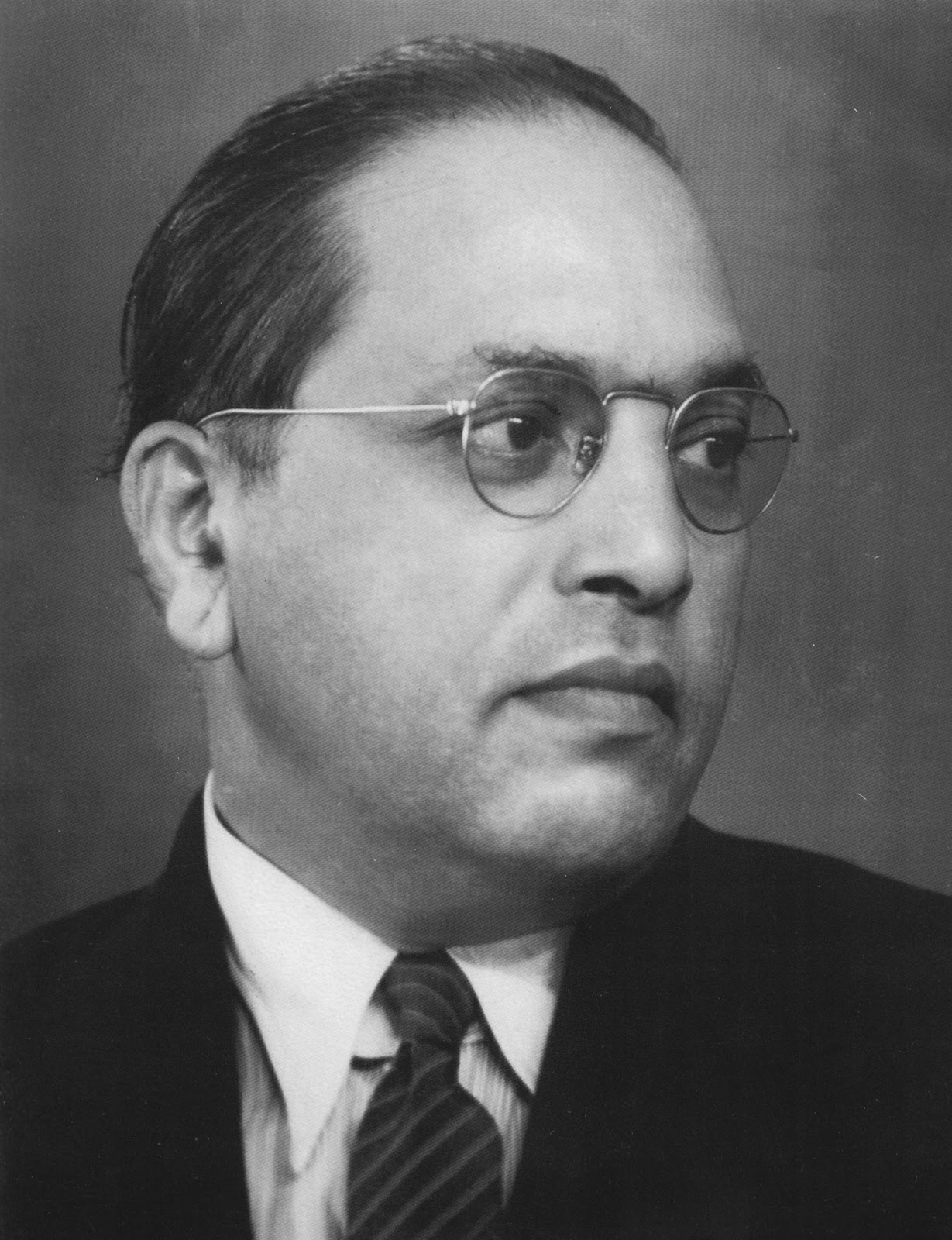
The new Andhra State has no fixed capital. I might incidentally say that I have never heard of the creation of a state without a capital. Mr. Rajagopalachari will not show the government of the proposed Andhra state the courtesy of allowing it to stay in Madras city even for one night. The new government is left to choose its own habitat and construct thereon its own hutments to transact the business. What place can we choose? With what can it construct its hutments? Andhra is Sahara and there are no oases in it.
Dr. B.R. Ambedkar, Writings and SpeechesAndhra was a Sahara. Telangana had the oasis. The merger was, at its core, the Sahara absorbing the oasis and then claiming credit for the water.
Financial Rescue: Andhra's Bankruptcy
The capital city problem was visible and embarrassing. The financial problem was existential. From the moment of its creation in 1953, the Andhra state was unable to meet its basic obligations. Its leaders documented this crisis in their own words with a candour that makes for remarkable reading six decades later.
Andhra's Financial Crisis, Documented by Its Own Leaders
- Neelam Sanjeeva Reddy, Deputy Chief Minister: "Now we are dragging on with a deficit of 18 crore rupees. We are not in a position to pay salaries to the staff unless the central government comes to our rescue." (AP Assembly, 5 November 1953)
- Bezawada Gopala Reddy, Chief Minister: "Out of 22 crore rupees of revenue receipts, administrative expenditure alone is eating away 20 crores." (AP Assembly, 15 September 1954)
- Neelam Sanjeeva Reddy: "Andhra Government had to borrow 6 crore rupees in the very first year of its inception." (AP Assembly, 25 January 1956)
- Bezawada Gopala Reddy: "Regular payment of monthly salaries to the teachers too has become a difficult exercise." (Andhra Patrika, 1 October 1953)
- M. Bhaktavatsalam, Finance Minister of Madras: "The sales tax receipts of the Andhra region are very negligible." (Madras Assembly, 31 January 1953)
- Andhra Chamber of Commerce: "In Andhra State, there are no industries at all." (Andhra Patrika, 20 January 1953)
- Bezawada Gopala Reddy: "There is neither coal nor oil available in Andhra State. Electricity is very expensive." (Andhra Patrika, 7 October 1953)
- Andhra Patrika: "There is a huge deficit in the revenue of the State. It is not at all possible to take up any new projects." (9 February 1956)
The SRC had examined this financial picture in detail. Its finding in Para 376 was categorical: the Andhra state "has faced a financial problem of some magnitude ever since it was created" and had "low per capita revenue" compared to Telangana. Telangana, the Commission found, was "much less likely to be faced with financial embarrassment." The merger, as the SRC warned, would simply exchange Telangana's stable revenues for Andhra's financial uncertainty.
Andhra Patrika's editorial of 4 November 1955 stated plainly what merger with Telangana would give Andhra: "a ready-made, well-developed capital city, advantages on social and cultural fronts, development of transport and communication facilities, and development of irrigation projects in Krishna and Godavari basins by mobilizing resources from 20 districts of Visalandhra, instead of 8 districts of Andhra." Not a word about Telugu brotherhood. A list of concrete material benefits, all of them at Telangana's expense.
River Waters: The Long Game
The third and perhaps most consequential thing Andhra wanted from the merger was control over the waters of the Krishna and Godavari rivers. Both rivers rise in Telangana territory, flow through Telangana for most of their length, and then reach the sea through Andhra's coastal delta. Telangana held 68.5% of the Krishna's catchment area and 69% of the Godavari's. Without control over those rivers, Andhra's agricultural heartland in the coastal delta was dependent on the goodwill of whoever governed Telangana.
The SRC had noted, in Para 377, that Telangana specifically feared losing its "present independent rights in relation to the utilization of the waters of the Krishna and the Godavari" if it merged with Andhra. This fear proved entirely justified. After the merger, irrigation projects in Telangana were systematically delayed, defunded and abandoned, while Andhra's delta irrigation infrastructure was expanded using funds that included Telangana's diverted revenues.
In all their utterances and outbursts, there was not even an iota of mention about common language, common culture or emotional unity of the Telugu people. All their anxiety was to extricate the then Andhra state from its miserable conditions.
On the real motivations behind the push for VisalandhraThe Slogan and the Reality
Telugu brotherhood was a powerful slogan. It resonated emotionally, it was difficult to argue against publicly, and it gave the merger the appearance of a cultural and civilisational project rather than what it actually was: a rescue operation for a bankrupt state that happened to share a language with a prosperous neighbour.
But language alone has never been a sufficient reason to merge political units. The SRC explicitly rejected the "one language one state" principle as the sole basis for reorganisation. The United Kingdom has English-speaking nations in multiple states. Switzerland has German speakers in both Switzerland and Germany. The fact that Telangana and Andhra spoke Telugu did not require them to share a state any more than Scotland and England being English-speaking required them to be the same country.
What was required, according to every principle of democratic governance and according to the SRC's own recommendation, was the consent of Telangana's people. That consent was never given. It was replaced by the slogan of Telugu brotherhood, by the promise of the Gentlemen's Agreement and by the political pressure of a national leadership that found it easier to accommodate Andhra's demands than to protect Telangana's rights.
Andhra got its capital city, its financial rescue and its river waters. Telangana got broken promises, a half-century of exploitation and, eventually, after 58 years, the separate state it had always deserved.