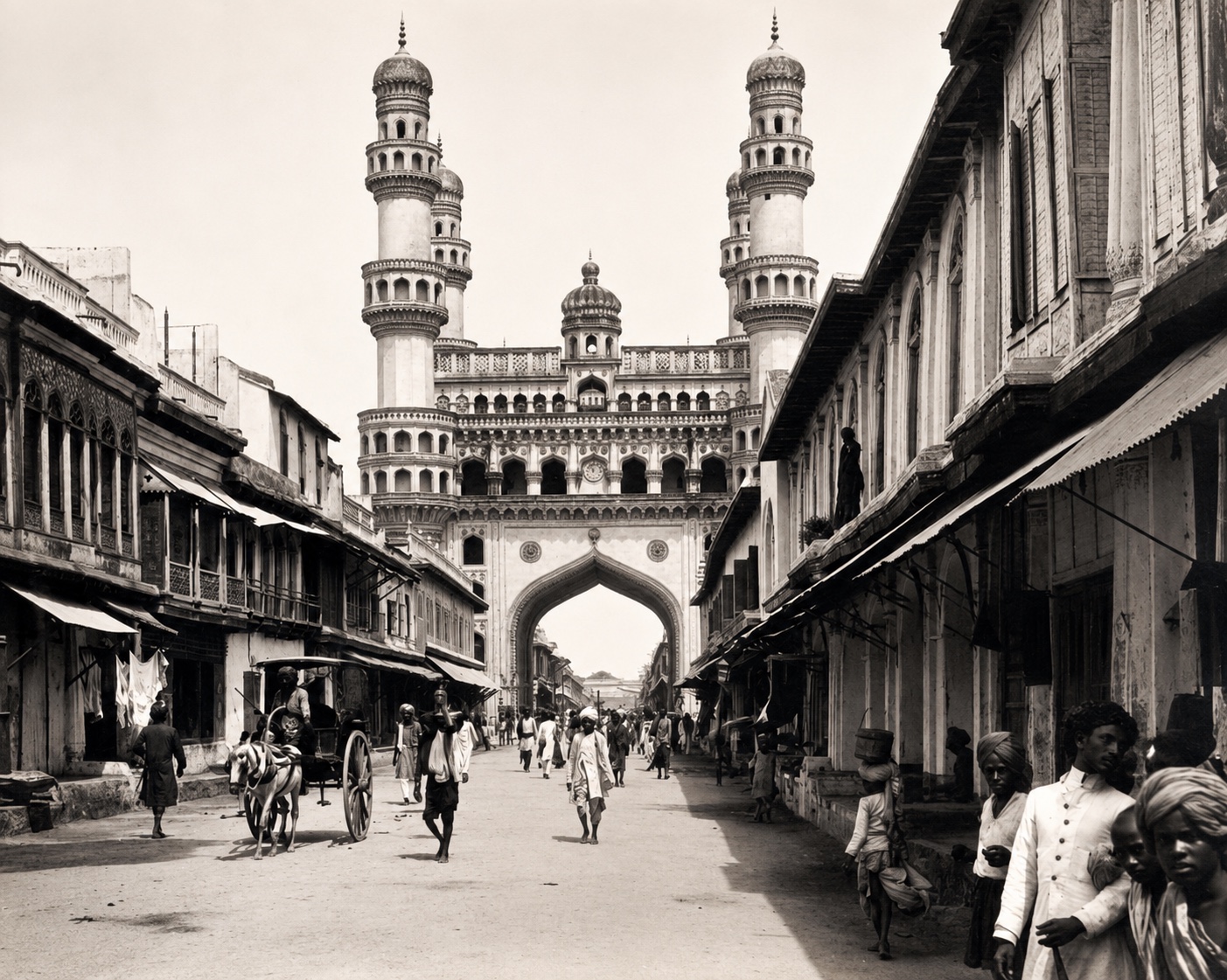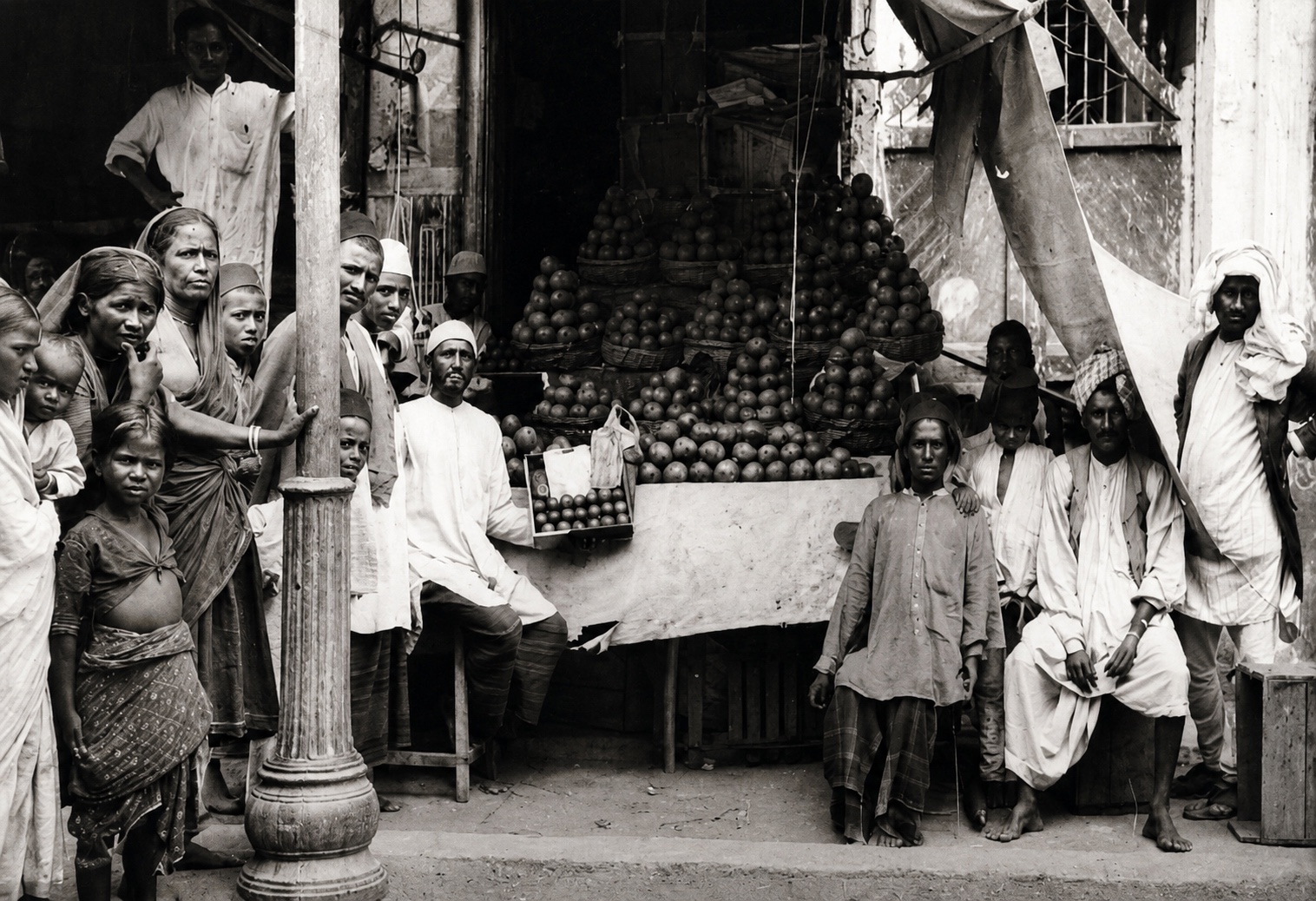
In 1955, when the proposal to merge Telangana with Andhra was placed before the States Reorganisation Commission, Telangana's political leadership spoke with rare unanimity: they did not want it.
The proposal to merge Telangana with the newly created Andhra State was not welcomed in Telangana. When the States Reorganisation Commission toured the region in 1955 to hear testimony, the response from Telangana's leaders, across parties and communities, was consistent and clear: the region would be better served as a separate state, and the risks of merger outweighed any benefit that a larger Telugu-speaking unit might bring.
This was not sentiment. It was calculation. Telangana's political leaders had watched what happened in neighbouring Andhra since 1953, when the state was carved from Madras following the fast unto death of Potti Sriramulu. They had observed how the new Andhra state worked, who it served, and where its political energies were directed. What they saw did not inspire confidence.
The Economic Argument
Telangana in 1955 was not a poor region. It was, in fiscal terms, a surplus region. Hyderabad State, of which Telangana formed the core, ran consistent revenue surpluses. Its revenues exceeded its expenditures. Andhra, by contrast, was in deficit. The merger being proposed was not, in that sense, of equals: it was a merger in which a region that could fund itself was being asked to join with one that could not.
Telangana feared that its revenues, built over decades from its own land and people, would be used to subsidise Andhra's deficit and Andhra's development rather than Telangana's own needs.
TRS Submission to the Sri Krishna Committee, 2010Telangana's leaders argued plainly: if the merged state was administered from the Andhra political centre, which would hold numerical majority and thus control the legislature, then Telangana's surplus revenues would flow towards Andhra priorities. Hyderabad's infrastructure, built under the Nizams over generations, would become a shared asset while Telangana's contributions to the merged state's revenues would quietly disappear into a common pool from which Andhra would draw more than its share.
This was not a speculative fear. It was a structural reading of how a democratic legislature works when one region holds a permanent numerical majority. Every budget, every allocation decision, every appointment would be made by a majority that came from one part of the state. The minority region, however productive, had no structural protection.
The Employment Argument
Telangana's educated class was employed, in the main, in the Hyderabad State administration. The bureaucracy, the revenue services, the judiciary and the public sector enterprises all carried a substantial Telangana presence because the state that employed them was Hyderabad State, which Telangana dominated numerically and historically.
A merger with Andhra would change this completely. The new, larger state would draw its civil service from a combined pool. Andhra's population was larger. Andhra's educated class, schooled in the Madras Presidency system, was well prepared for competitive examinations. In an open competition across the merged state, Telangana's candidates would face an enormous numerical disadvantage.
- Revenue surpluses earned in Telangana would be diverted to Andhra's deficit regions
- Telangana civil servants would be displaced by Andhra candidates in open competition
- Hyderabad's developed infrastructure would serve a state whose political centre was coastal Andhra
- Numerical minority status would leave Telangana permanently vulnerable in the legislature
- The Mulki Rules protecting local employment would face constant pressure under a merged state
- Educational institutions built for Hyderabad State residents would be opened to Andhra migration
Telangana's leaders therefore sought protections, specifically the continuation and enforcement of the Mulki Rules, which had long governed employment in Hyderabad State by requiring a period of local residence before a person could be considered a local candidate for government posts. These rules had worked. They had ensured that government employment in Hyderabad State reflected the region's own population. Under a merged Andhra-Telangana state, Telangana leaders doubted these protections would survive, or if they survived on paper, that they would be enforced in practice.
The Political Argument
The numerical mathematics of a merged state were straightforward and alarming. Andhra's population was larger than Telangana's. In any legislature constituted on the basis of population, Andhra would hold more seats. This meant that on any question where Andhra's interests diverged from Telangana's interests (which in resource allocation and employment was virtually every question) Andhra would win. Not through malice, necessarily, but simply through the working of democratic arithmetic.
A numerically smaller region merged into a larger one, without structural protections, does not have partners. It has rulers. The arithmetic of democracy, without safeguards, becomes the arithmetic of domination.
TRS Submission to the Sri Krishna Committee, 2010Telangana's political leaders in 1955 were not against the idea of a Telugu-speaking state on principle. Many of them understood the cultural and linguistic argument for unity. What they opposed was merger without guarantees, without structural protections, without enforceable safeguards that could survive the pressures of a majority-dominated legislature.
They asked for a separate state not because they rejected Andhra but because they understood that without a separate state, they would have no state at all. They would have Andhra, with Telangana attached.
What the States Reorganisation Commission Heard
The testimony before the States Reorganisation Commission was, on the Telangana side, among the most organised and substantive of any region in the country. Witnesses came with data. Revenue figures were presented. Employment statistics were laid out. The case was made not in the language of sentiment but in the language of administration and fiscal analysis.
The commission listened. It concluded, after weighing the evidence, that a separate Telangana state was the wiser course. Its report acknowledged the validity of Telangana's fears. It noted that without credible guarantees, the merger would likely lead to exactly the consequences Telangana's leaders feared.
Yet the merger happened anyway. The commission's recommendation was overridden by political pressure, by Andhra's vigorous lobbying at the national level, and by the belief in some quarters of the national leadership that a large, unified Telugu state was both administratively and politically preferable.
The fears that Telangana's leaders articulated in 1955 were not the fears of timid men protecting parochial interests. They were precise predictions about how power works when it flows from numerical advantage in a democratic system without structural protections for the minority. In the decades that followed 1956, each of those predictions was confirmed. The merger of 1956 happened not because Telangana consented, not because the States Reorganisation Commission recommended it, and not because Jawaharlal Nehru thought it wise. It happened because the political pressure of Andhra's leadership overwhelmed the rational recommendations of the commission appointed to study the very question.
What followed in the decades after 1956 was exactly what Telangana had feared. The SRC's warning that Telangana may be converted into a colony by the more enterprising people from the other region proved not to be a warning at all. It proved to be a precise description of what actually happened.