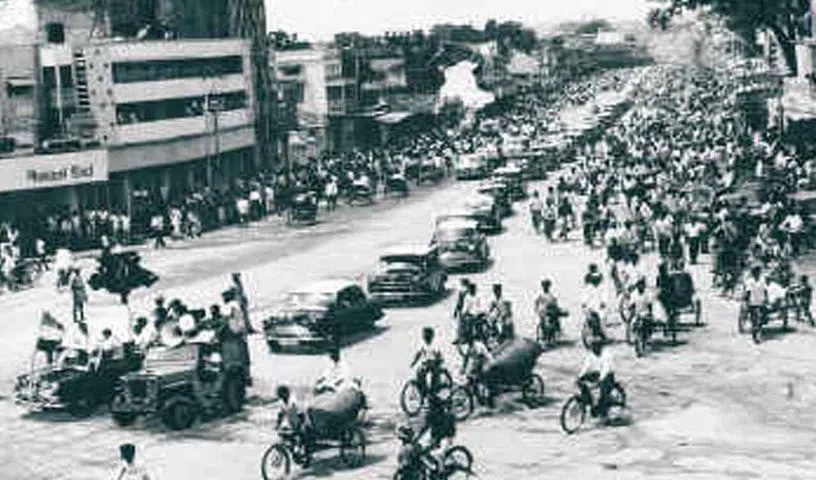
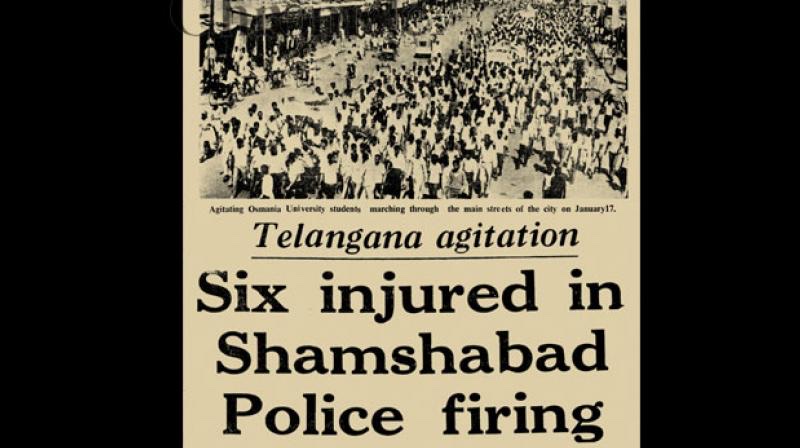
The Jai Telangana movement of 1968 to 1969 was not a spontaneous outbreak of sentiment. It was the inevitable consequence of thirteen years of broken promises, systematic exploitation and the daily humiliation of watching outsiders fill the government jobs that Telangana's educated youth had been promised by law. The movement began among students, spread to government employees, engulfed the general public, and paralysed the administration of Telangana for months. It was the first time the demand for a separate Telangana state, which had existed before the merger itself, became a mass movement rather than a political aspiration.
The trigger was the Mulki Rules, and more specifically, the systematic violation of those rules by the state government over thirteen years. The Mulki Rules required that government posts in Hyderabad state's Telangana region be reserved for people who had resided in the region for a minimum period. After the merger, employees from Andhra had been posted to Telangana in thousands, taking jobs that the rules required to be given to local residents. By 1968, an estimated 22,000 non-local employees were working in Telangana in violation of those rules. The students who took to the streets in 1968 and 1969 were not fighting for an abstraction. They were fighting for their future.
The Background: Thirteen Years of Broken Promises
To understand why 1969 happened, one must understand what Telangana had experienced in the thirteen years since the merger. The Gentlemen's Agreement had promised that Telangana's revenue surpluses would not be diverted to Andhra. They were diverted from Day One, with 41.07% transferred in the very first year. The Agreement had promised proportional employment for Telangana's people. Non-locals were taking those jobs in violation of the Mulki Rules. The Agreement had promised proportional representation in the cabinet and Chief Ministership. Telangana's political leadership was being systematically marginalised.
The accumulated grievances had been building since 1956. What 1969 demonstrated was that the patience of Telangana's people had a limit, and that limit had been reached.
The Course of the Movement
What the Movement Was Fighting For
The Jai Telangana movement of 1969 had a clear and specific set of demands, grounded entirely in legal protections that already existed but were being violated. It was not asking for something new. It was asking for what had been promised and what the law required.
The Core Demands of the 1969 Jai Telangana Movement
- Implementation of the Mulki Rules, which legally required government posts in Telangana to be filled by local residents. These rules were being systematically violated with 22,000 non-local employees filling Telangana positions.
- Repatriation of non-local employees to their home regions. Every non-local employee in a Telangana position was occupying a job that should have gone to a person from Telangana.
- Honouring of the Gentlemen's Agreement of 1956, specifically the provisions on revenue surpluses being reserved for Telangana's development and proportional representation in government positions and cabinet.
- Fair allocation of development expenditure in proportion to Telangana's population and revenue contribution. The region was contributing more and receiving less across every sphere of government activity.
- And for many of the movement's participants, the ultimate demand: a separate state of Telangana, as the SRC had recommended in 1955 and as the people of the region had always wanted.
The Students Who Died
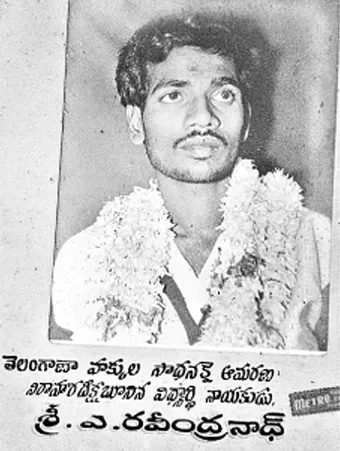

The 369 people killed in the 1969 uprising were not soldiers or armed combatants. They were students, mostly young men and women who had taken to the streets because they could see their future being taken from them. They could see that the government jobs for which they had studied were being filled by people from outside their region. They could see that the legal protections meant to safeguard their opportunities were being openly flouted. They took to the streets in protest. The state government responded with bullets.
The upheaval of 1968 to 1969, when about 369 people, mostly students, were killed in the reign of terror unleashed by the state government of the time. This resistance, intermittent yet sustained, took and continues to take several forms.
On the 1969 Jai Telangana uprising and its suppressionThe movement was suppressed. The state government used police force to restore order. The leaders of the agitation were arrested. But the underlying conditions that had caused the movement, the violation of the Mulki Rules, the diversion of revenues, the denial of employment to Telangana's people, the failure to implement any of the development promises made at the time of the merger, none of those conditions were addressed. The All Party Accord was made and broken. Indira Gandhi's formulas were announced and ignored. And the Supreme Court's subsequent validation of the Mulki Rules was nullified by Parliament itself.
The Significance of 1969
The Jai Telangana movement of 1969 is the first great landmark of the modern Telangana struggle. It established several things that would remain true for the next four decades. It established that the people of Telangana would not passively accept the exploitation and marginalisation they experienced in the integrated state. It established that the demand for a separate state, which the political leadership had accepted with reluctant resignation in 1956, had deep roots in the popular consciousness of Telangana's people. And it established, tragically, that the state government of Andhra Pradesh was willing to use lethal force to suppress that demand.
Those 369 lives were the price of 1969. Those lives were not wasted. They became part of the foundation on which the demand for statehood was built. They became part of the moral argument that could not be answered: that a region whose people were willing to die for the right to govern themselves deserved, eventually, to do exactly that. On 2 June 2014, forty-five years after the rifles of 1969, that right was finally recognised.