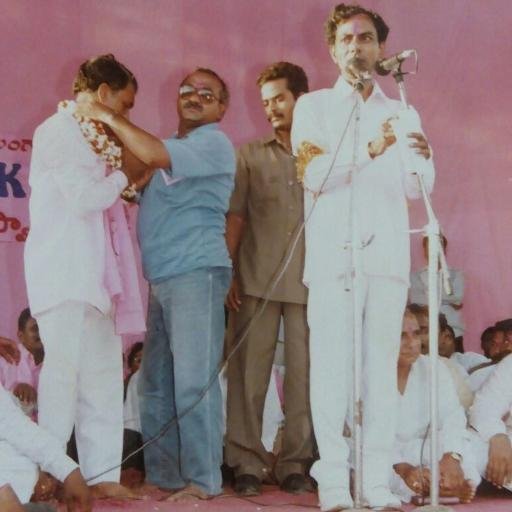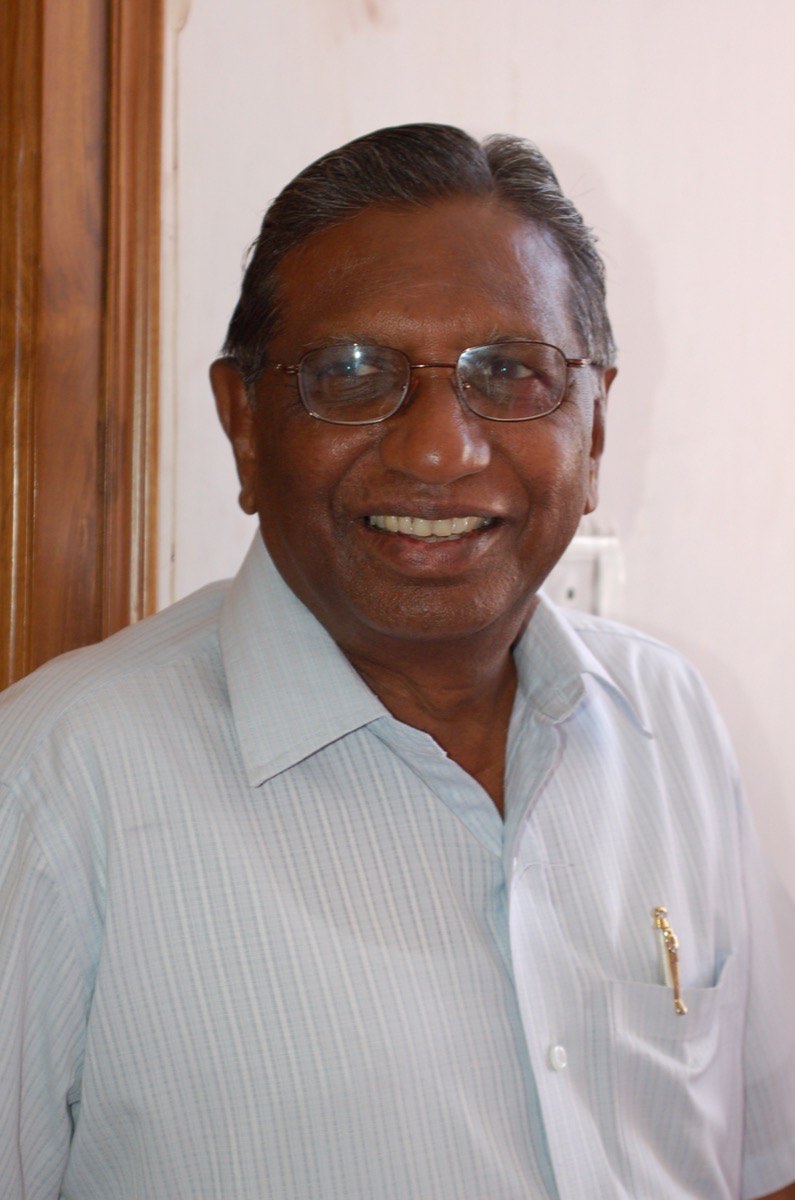
Kothapalli Jayashankar was born on 6 August 1934 in Akkampet village, Atmakur mandal, Warangal. He spent his life in the service of a single conviction: that Telangana's people deserved their own state, and that the case for it could be made so completely, so rigorously and so honestly that no honest person who examined the evidence could deny it. He was an economics professor by training, a Vice-Chancellor of Kakatiya University by position, and an activist by vocation. He had been fighting for Telangana since 1952, when as a student he stood up against the Non-Mulki agitation. He defied authority as a child, singing Vande Mataram when his school ordered him to sing praise of the Nizam. That same refusal to accept what was unjust would define his life.
When K. Chandrasekhar Rao met Jayashankar in October 2000, the professor was already a veteran of the Telangana cause across five decades. He had participated in the 1969 uprising, formed a team of ten intellectuals to contribute to the movement that year, watched his colleagues fall in police firing while he survived, seen the failure of every formula and agreement that followed, and spent the intervening decades building the intellectual case for why separation was not just desirable but historically necessary, economically documented and constitutionally justified. In KCR, he found the political leader the movement had been waiting for. In Jayashankar, KCR found the intellectual guide who could give political language to five decades of accumulated truth.
In His Own Words, On KCR
When Jayashankar was asked about his decision to align with KCR and the TRS, he spoke with characteristic directness in the Telangana dialect, the language of his people. His words, recorded and widely documented, capture precisely why he saw in KCR what he had never seen in any previous political leader who had taken up the Telangana cause.
This statement is the most revealing thing Jayashankar ever said about KCR. He was not simply expressing support. He was explaining, with the precision of a scholar, what made KCR different from every political leader who had come before. The movement had the substance. KCR was the instrument through which that substance could be converted into political reality. Their partnership was not accidental. It was the meeting of exactly the two kinds of capacity the movement required.
What He Said About Telangana's People
That single phrase, ettikaina, mattikaina manode undale, in Jayashankar's characteristic Telangana dialect, says more about the employment crisis and the human stakes of the statehood demand than pages of statistics. It reaches across a whole life, whatever may come and right down to the soil that takes us back, and says simply: in our land, for our land, it should be our people. Not the people who came from elsewhere. Not the outsiders who filled the jobs that belonged to Telangana's children. Our people.
The Intellectual Foundation He Built
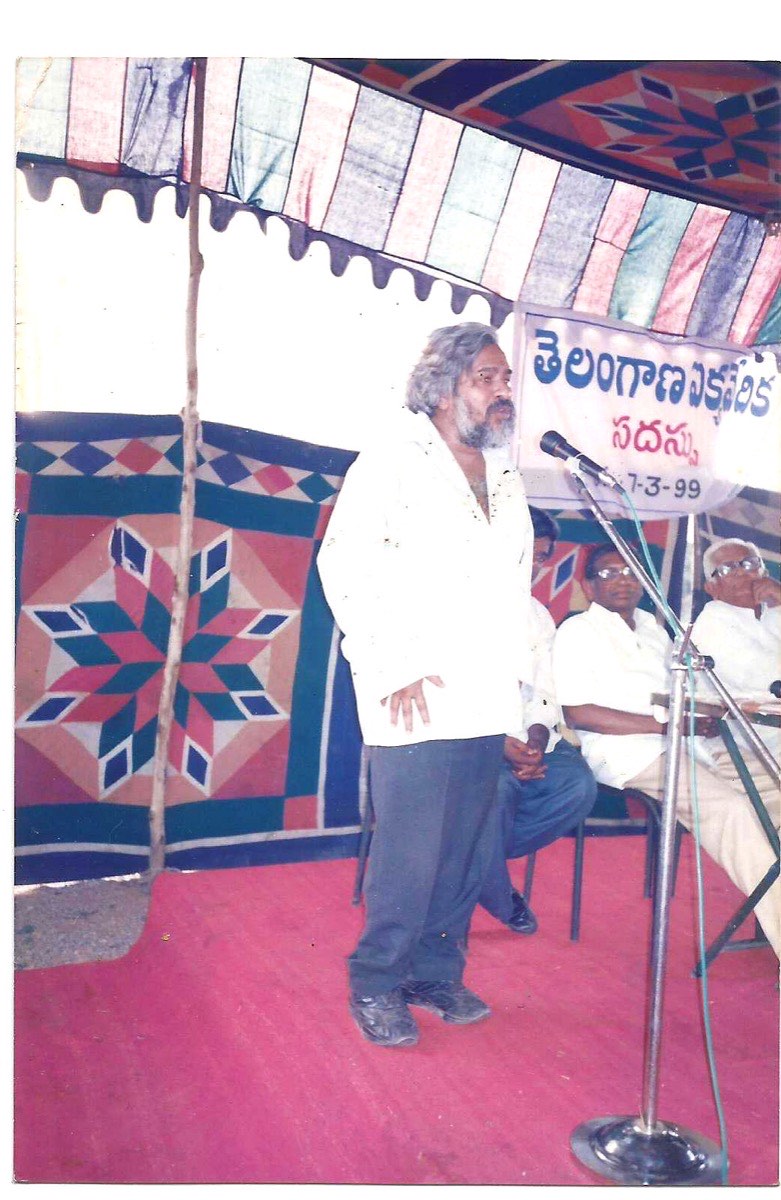
Jayashankar's contribution to the Telangana movement was not that of a street-level activist, though he participated in protests and public meetings throughout his life. His contribution was of a different and rarer kind: he was the person who ensured that the demand for Telangana statehood was always grounded in documented evidence, economic analysis and historical fact, never reducible to mere sentiment or political grievance.
It was Jayashankar who developed and systematised the data on Telangana's revenue contribution and development expenditure deficit, the water rights violations, the employment discrimination and the educational deprivation. He organised seminars, compiled statistics, published books and papers, and created the intellectual architecture on which every subsequent argument for Telangana statehood rested. He founded the Telangana Development Forum in the United States in 1999, addressed the American Telugu Association in 2000 and 2002, delivered lecture series across ten major American cities, and ensured that the Telangana case was known not just within the region but across the world wherever Telugu people lived. At the time of his death, he was chairman of the Centre for Telangana Studies.
KCR on Jayashankar
His contribution to the movement was invaluable. His advice gave me immense courage to lead the agitation. He stood by me at every stage. His dream was not only to achieve statehood but also to see a progressive Telangana.
K. Chandrasekhar Rao, on Prof. Kothapalli JayashankarThe Final Separation
Professor Kothapalli Jayashankar died of stomach cancer on 21 June 2011, at 11.15 AM. He was 76 years old. The state he had devoted his entire life to was still three years away. He had been present at the decisive hunger strike of 2009, had contributed to the Sri Krishna Committee submission of 2010, had spoken at the Maha Garjana in Warangal in December 2010 before an estimated 25 lakh people with the same passion he had brought to meetings of ten in village halls. He had given everything.
When news of his death reached KCR, he wept inconsolably. He personally led the funeral procession from Hanamkonda Ekashila Park to Padmakshi Gutta. When the time came for Jayashankar's body to be placed on the funeral pyre, KCR's grief was beyond control. Those who were present said no one could hold him back from taking that final look. The man who had guided the movement, who had provided the intellectual foundation, who had given KCR the courage to lead, was gone. Three years later, the state they had built together came into existence. The Prof. Jayashankar Telangana State Agricultural University, established in his honour, ensures that his name is woven permanently into the fabric of the state he never saw but made possible.
When the oppressed society raises its voice, the educated must wield the pen.
Prof. Kothapalli Jayashankar