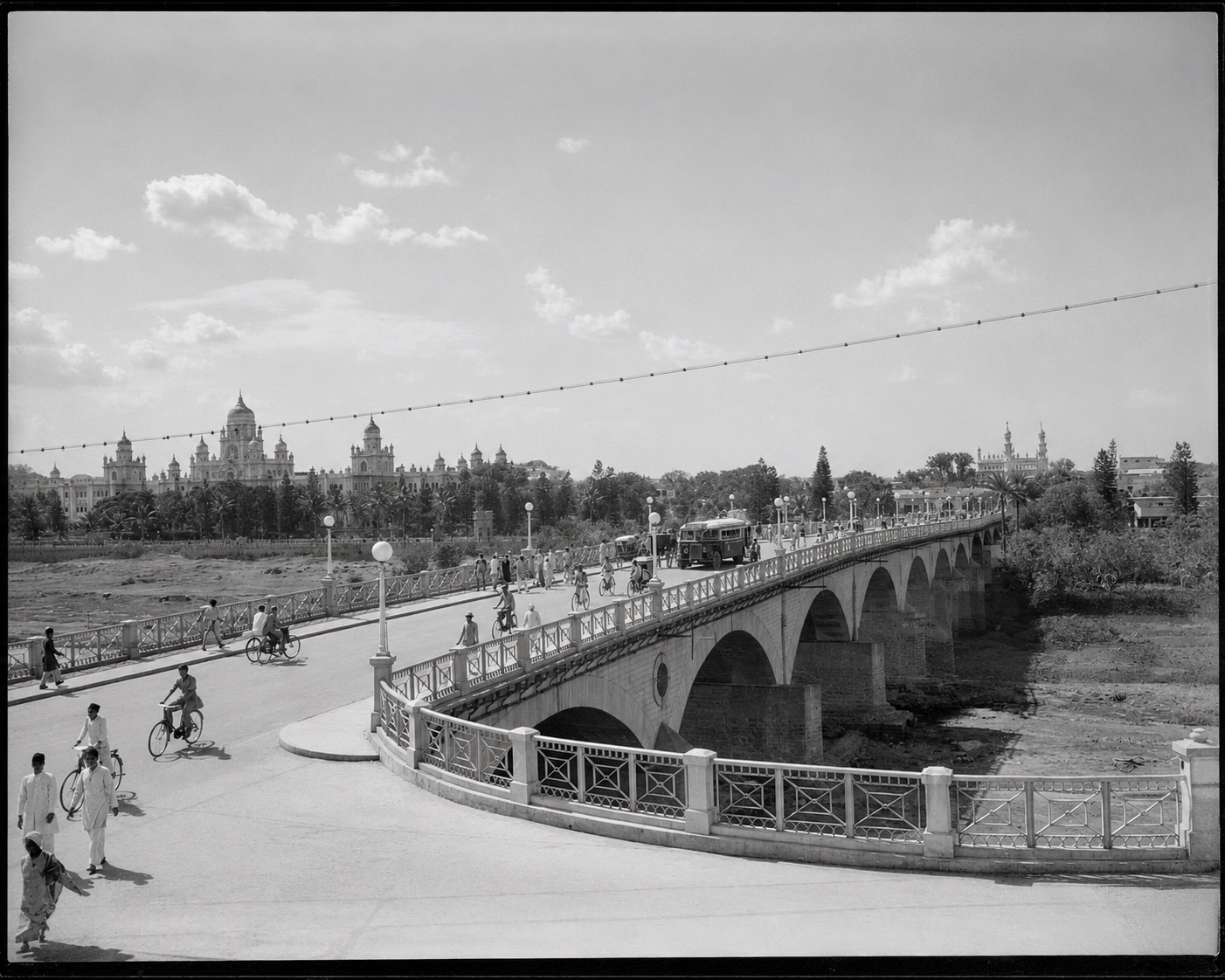
The States Reorganisation Commission was not a minor bureaucratic body. Constituted by the Government of India in 1953 under Justice Fazal Ali, it was given the specific mandate to examine the question of reorganising India's states and to make recommendations based on evidence. It travelled the country, heard thousands of representations and studied the economic and administrative realities of each proposed reorganisation with care.
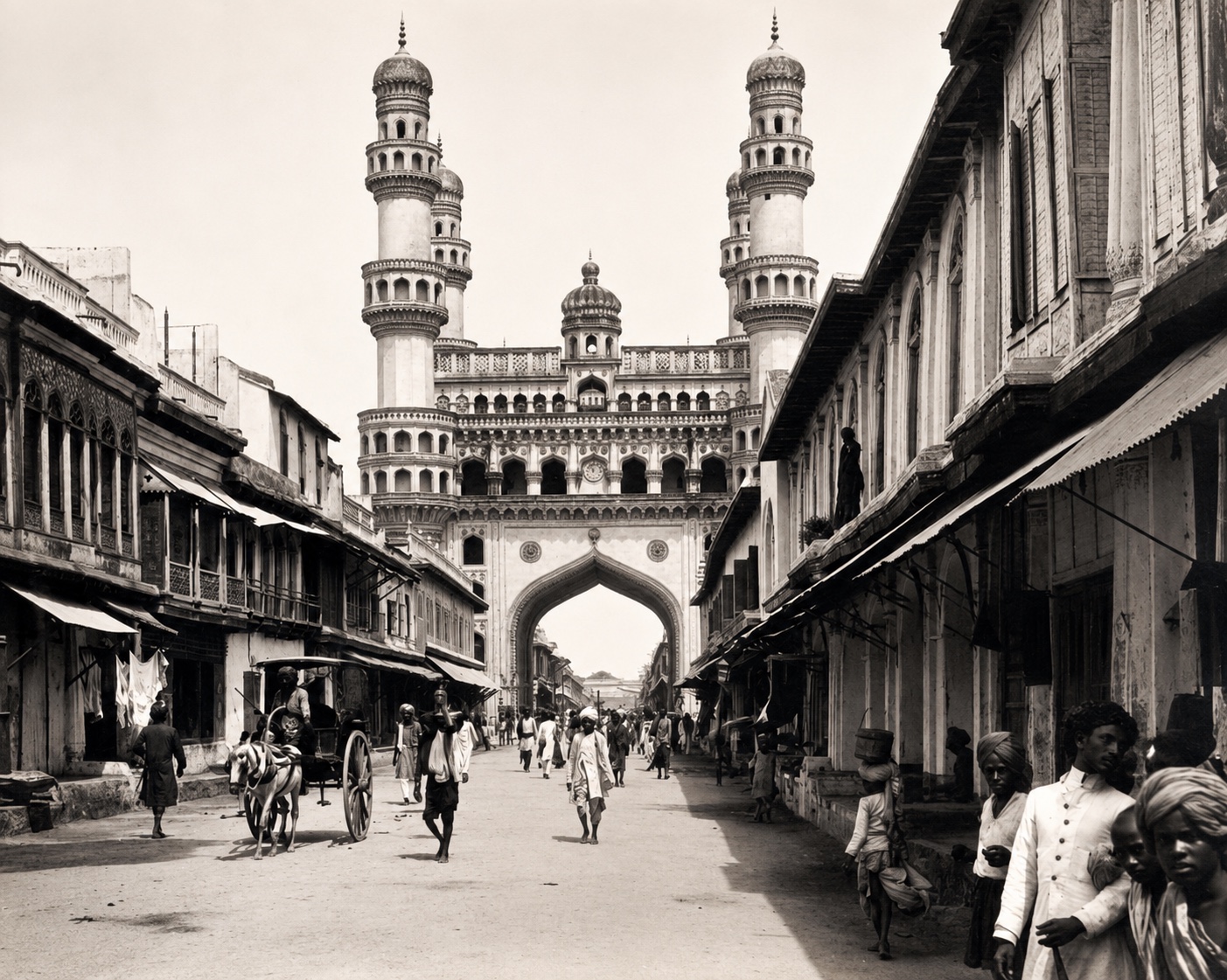
When it came to Telangana, the Commission did its work thoroughly. It examined the financial position of both Telangana and Andhra. It listened to the fears of Telangana's people. It assessed the political pressures being applied by Andhra's leadership. And at the end of this careful examination, it reached a conclusion that was the opposite of what Andhra's leadership wanted: Telangana should not be merged with Andhra. Not yet. Not without Telangana's own freely expressed consent.
The Commission's Findings on Telangana
The SRC's report addressed Telangana at length. Its findings on the region's situation were detailed, specific and precise about the risks of merger. Three sets of observations are critical.
On the Fear of Exploitation
One of the principal causes of opposition to Visalandhra also seems to be the apprehensions felt by the educationally backward people of Telangana that they may be swamped and exploited by the more advanced people of the Coastal areas. The real fear of the people of Telangana is that if they join Andhra they will be unequally placed in relation to the people of Andhra and in this partnership the major partner will derive all the advantages immediately while Telangana itself may be converted into a colony by the enterprising Andhras.
On the Water Question
When plans for future development are taken into account, Telangana fears that the claims of this area may not receive adequate consideration in Vishalandhra. Telangana, therefore, does not wish to lose its present independent rights in relation to the utilization of the waters of the Krishna and the Godavari.
On Telangana's Financial Strength vs Andhra's Weakness
The existing Andhra state has faced a financial problem of some magnitude ever since it was created; and in comparison with Telangana, the existing Andhra state has low per capita revenue. Telangana, on the other hand, is much less likely to be faced with financial embarrassment. The result of the unification will be to exchange some settled sources of revenue, out of which development schemes may be financed, for financial uncertainty similar to that with which Andhra is now faced. Telangana claims to be progressive and from an administrative point of view, unification, it is contended, is not likely to confer any benefit on this area.
The Commission was saying plainly: Andhra needs Telangana's resources far more than Telangana needs Andhra. Any merger risks draining Telangana for Andhra's benefit. The fears of Telangana's people are legitimate and grounded in economic reality.
The Recommendation: A Separate State
On the basis of these findings, the SRC made its recommendation in Para 386. It is worth reading in full, because the overriding of this recommendation by political pressure in 1956 is the foundational injustice of Telangana's modern history.
It will be in the interest of Andhra as well as Telangana if, for the present, the Telangana area is constituted into a separate state which may be known as the Hyderabad state, with provision for its unification with Andhra after the general elections likely to be held in or about 1961, if by two-thirds majority the legislature of the residuary Hyderabad state expresses itself in favour of such unification.
SRC Report, Para 386, 1955In Para 388, the Commission added a crucial safeguard. If public sentiment in Telangana crystallised against unification, Telangana must continue as a separate unit. Any merger, the Commission made plain, must emerge from Telangana's own free will, not from political pressure applied from outside.
Andhra and Telangana have common interests and we hope these interests will tend to bring the people closer to each other. If, however, our hopes do not materialize and if public sentiment in Telangana crystallizes itself against the unification of the two states, Telangana will have to continue as a separate unit.
SRC Report, Para 388, 1955And in Para 384, the Commission addressed the question of whether constitutional arrangements could substitute for genuine statehood, and answered with a directness that proved prophetic:
Neither guarantees on the lines of the Sri Baug Pact nor constitutional devices, such as Scottish devolution in the United Kingdom, will prove workable or meet the requirements of Telangana during the period of transition. Anything short of supervision by the Central Government over the measures intended to meet the special needs of Telangana will be found ineffective.
The Commission was predicting in 1955 that all the agreements, formulas and constitutional safeguards that would be offered to Telangana in the coming decades would prove ineffective. It was right about every single one of them. The Gentlemen's Agreement, the Eight Point Formula, the Five Point Formula, the Mulki Rules, the Six Point Formula: all failed, exactly as the SRC predicted.
One Language, One State: A Principle the Commission Rejected
Andhra's central argument for Visalandhra was the principle of linguistic unity: one language should mean one state. The SRC examined this principle carefully and explicitly rejected it as the sole basis for reorganisation.
To reject the theory of one language one state which is neither justified on grounds of linguistic homogeneity, because there can be more than one state speaking the same language without offending the linguistic principle, nor practicable, since different language groups cannot always be consolidated to form distinct linguistic units.
SRC Report, Para 163, 1955The Commission was clear: speaking the same language does not require sharing a state. There can be more than one Telugu-speaking state without violating any principle. Andhra's argument that Telugu brotherhood demanded a single state was not a principle. It was a convenience, deployed to justify a merger that served Andhra's interests.
Andhra's Reaction: Panic, Not Principle
When the SRC released its recommendation that Telangana should remain separate, the reaction in Andhra was one of open panic. The political leadership, which had staked its future on getting access to Hyderabad and Telangana's resources, could not accept the finding. Their responses, recorded in the Andhra Patrika in November 1955, reveal the urgency and self-interest behind the push for Visalandhra.
Andhra Leaders React to the SRC Recommendation, November 1955
- Ayyadevara Kaleswara Rao: "If the formation of Visalandhra is postponed, it will never happen. It is dangerous to wait for six years. The desire for separate Telangana will be further strengthened, and then they will not agree for Visalandhra." (Andhra Patrika, 2 November 1955)
- Kasu Brahmananda Reddy: "Creating separate Telangana state and then waiting for five years is not a good idea. The necessity of getting two-thirds majority in the assembly is incomprehensible. Why should we wait till the 1961 elections are over?" (Andhra Patrika, 2 November 1955)
- Neelam Sanjeeva Reddy: "If not now, Visalandhra can never be formed." (Andhra Patrika, 4 November 1955)
- Vavilala Gopalakrishnayya: "If Visalandhra is not formed now, it might become impossible later." (Andhra Patrika, 6 November 1955)
- Kala Venkata Rao: "If it is feared that the lands in Telangana will be usurped by Andhras, a law can be made to prevent that." (Andhra Patrika, 14 November 1955)
These statements are extraordinary in what they reveal. Andhra's leaders were not arguing that the SRC was wrong on the merits. They were arguing that the opportunity would be lost. That if they waited for Telangana's consent, that consent would never come. That speed was essential precisely because Telangana's opposition would only harden with time. In other words: the merger had to happen before Telangana could stop it.
The Andhra Assembly Resolution: Promises Made to Be Broken
On 25 November 1955, Chief Minister Bezawada Gopala Reddy introduced a resolution in the Andhra Assembly, passed unanimously, promising generous treatment of Telangana after the merger.
Andhra Assembly Resolution, 25 November 1955
- We deem it our special responsibility to develop the Telangana region.
- We will safeguard the rights of the region in employment and education proportionate to the population of the region.
- All the resources that rightfully belong to the Telangana region will be utilised for the benefit of only the people of that region.
- We will be very generous towards them.
- The people of Telangana have not asked us for any of these assurances, and all these assurances are given by all political parties unanimously.
Every single one of these assurances was broken, beginning on 1 November 1956, the very day Andhra Pradesh was formed. Telangana's resources were not reserved for its people. They were diverted to meet Andhra's deficit within months. Employment protections were violated systematically for decades. The development of Telangana's irrigation, education and industry was neglected at every turn. The people of Telangana had not asked for these assurances. They had asked for something simpler: to remain a separate state, as the SRC had recommended. That was denied. The assurances were offered in its place. And then those assurances were broken.
The Commission's Verdict, Vindicated by History
Decades later, the Krishna Water Disputes Tribunal echoed the SRC's warning about Telangana's water rights almost word for word. Examining the situation in Mahbubnagar district, through which the longest stretch of the Krishna River in India flows, the Tribunal observed:
The area which we are considering for irrigation formed part of Hyderabad State, and had there been no division of that State there were better chances for the residents of this area to get irrigation facilities in Mahabubnagar District. We are of the opinion that this area should not be deprived of the benefit of irrigation on account of the reorganization of States.
Krishna Water Disputes Tribunal Report, Page 178A district through which India's longest stretch of the Krishna flows, and its people could not get enough water to irrigate their fields. That was the outcome the SRC had warned about in 1955. That was the outcome the Andhra Assembly had promised in 1955 would never happen. That was the outcome that happened anyway, for 58 years, until statehood came on 2 June 2014.
The States Reorganisation Commission said no to the merger in 1955. Its recommendation was overridden by political pressure in 1956. Its predictions about what would happen if the merger was forced proved accurate in every detail across every sphere, financial, educational, water, employment and power. The story of Telangana from 1956 to 2014 is, in many ways, simply the story of the SRC being proved right, decade after decade, at the cost of millions of Telangana lives.