The sequence of events from 1972 to 1973 remains one of the most extraordinary chapters in the constitutional history of independent India. A minority region won a landmark judgment from the country's highest court, protecting its fundamental right to employment in its own homeland. Within twelve months, the parliamentary majority of the dominant region in the same state had used its numerical strength to pass legislation that nullified that judgment. The Supreme Court of India was overruled by a simple parliamentary majority, not because the court was wrong on the law, but because one region of one state had enough seats in Parliament to make the result go its way.
This episode is not merely a chapter in Telangana's history. It is a lesson in the limits of constitutional protections when a numerical majority is determined to override them. And it explains, more clearly than almost anything else, why Telangana's people concluded that the only reliable protection for their rights was a separate state government of their own.
What the Mulki Rules Were
The Mulki Rules were not a post-merger invention. They predated the formation of Andhra Pradesh, originating in the Hyderabad state. They required that a person seeking government employment or educational opportunities in the Telangana region must have been a resident of that region for a specified number of years. The word "Mulki" means local or resident in Urdu. The rules were designed precisely to prevent the more educated and better-connected populations from other regions from displacing the local population in their own government services.
When Andhra Pradesh was formed in 1956, the Mulki Rules continued to apply in the Telangana region, providing the legal framework that the Gentlemen's Agreement had promised would protect Telangana's employment rights. They were violated from the first day of the merged state, with Andhra employees being posted to Telangana positions in thousands. The 1969 Jai Telangana movement had demanded their implementation. That demand had been suppressed by force and the All Party Accord that followed had been broken. The Mulki Rules remained on the books, unenforced.
The Supreme Court Upholds Telangana's Rights: 1972
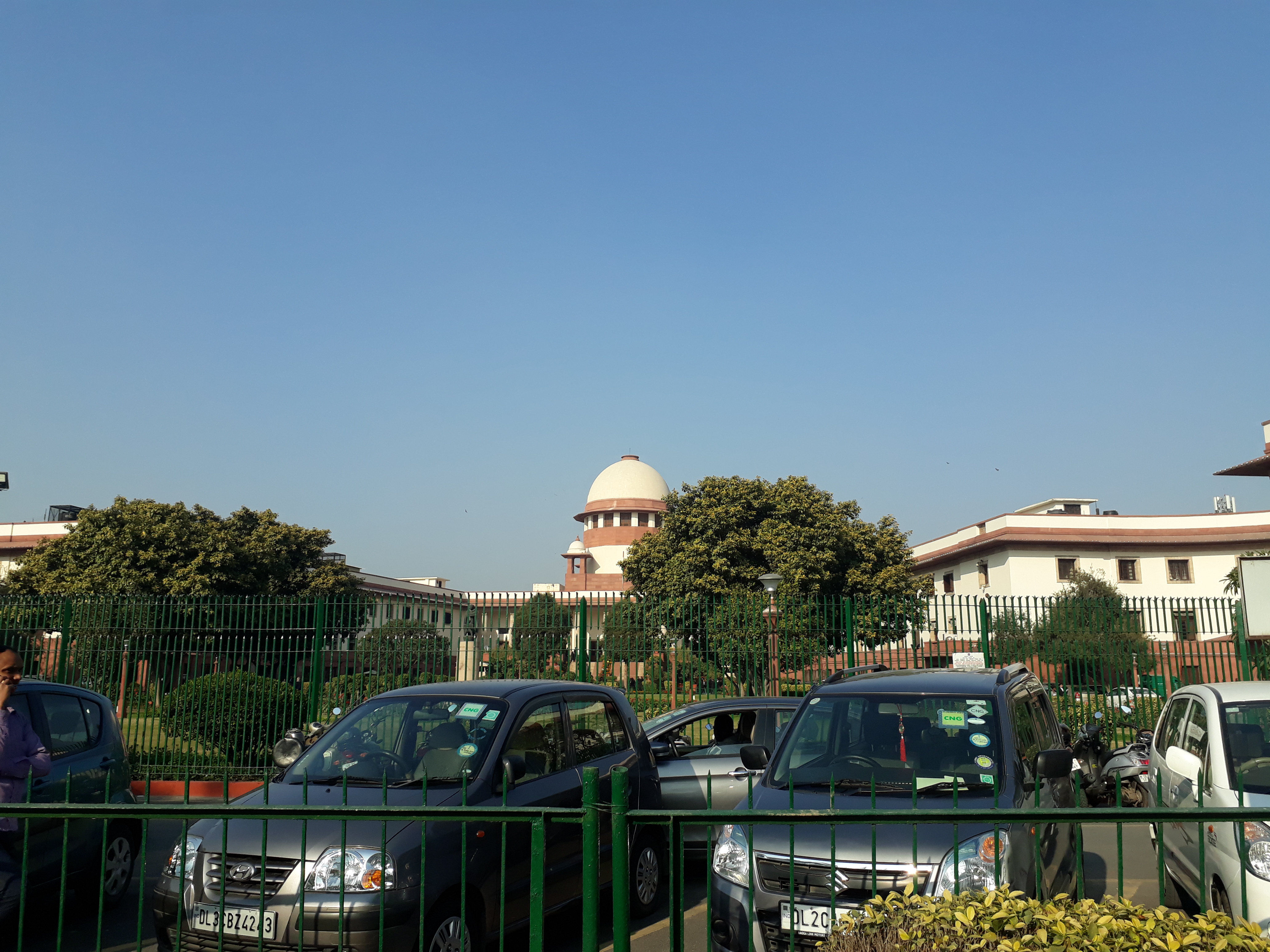
In 1972, the Supreme Court of India delivered a historic judgment. It ruled that the Mulki Rules were constitutionally valid and legally enforceable. The highest court in the land had examined the question of whether Telangana's residents had a legal right to preferential employment in their region, and had answered: yes, they do. This was a complete vindication of everything Telangana had been demanding since 1956 and everything the 1969 movement had been killed for demanding.
The judgment sent a shock through Andhra's political establishment. If implemented, it would have required the repatriation of thousands of Andhra employees from Telangana positions back to their home region. It would have opened those positions to Telangana's own people. It would have given the employment protections that the Gentlemen's Agreement had promised in 1956 the force of a Supreme Court order.
Parliament Nullifies the Supreme Court: 1973
The response from Andhra's political leadership was not to accept the court's ruling. It was to launch what became known as the Jai Andhra movement, demanding either the scrapping of all safeguards for Telangana or the bifurcation of Andhra Pradesh into two states. The movement threatened violence and used the disruption it created as leverage to force the central government's hand.
The historic verdict of the Supreme Court of India validating the Mulki Rules was got annulled by the Parliament, succumbing to the pressure of anti-Telangana lobby of Andhra. Something unheard of in a democratic polity.
On Parliament's nullification of the Supreme Court's Mulki Rules judgmentThe Government of India, facing political pressure from Andhra's leadership and the disruption created by the Jai Andhra movement, yielded. Parliament passed legislation that effectively nullified the Supreme Court's judgment on the Mulki Rules. It was something unheard of in a democratic polity. A constitutional court's protection of a minority region's rights had been overturned by the parliamentary majority of the dominant region in the same state.
The leaders of the Jai Andhra movement included names that would remain prominent in Andhra's politics for decades. Among those in the forefront of the movement demanding that Telangana's protections be stripped away were Venkaiah Naidu and Chandrababu Naidu.
The Jai Andhra Movement: What It Was Really About
The Jai Andhra movement presented itself as a demand for either scrapping Telangana's protections or bifurcating the state. But its real character was revealed by its targets: it demanded the elimination of the specific legal protections that had been put in place to prevent Andhra employees from displacing Telangana's people in their own homeland. It was a movement by the dominant region to preserve its ability to continue taking from the weaker one.
What the Jai Andhra Movement Demanded
- Scrapping of the Mulki Rules, which had just been upheld by the Supreme Court as protecting Telangana's employment rights.
- Annulment of the Supreme Court judgment, so that Andhra employees could continue to fill Telangana positions without legal challenge.
- Scrapping of all safeguards given to the people of Telangana under the Gentlemen's Agreement and subsequent formulas.
- If the above demands were not met, bifurcation of Andhra Pradesh into Andhra and Telangana states. This demand was tactical: Andhra's leaders knew the central government would rather yield on the Mulki Rules than bifurcate the state.
- The movement used disruption, threatened violence and political pressure rather than legal or moral argument. Its leverage was Andhra's numerical majority in Parliament and the state legislature.
The Result: Everything Stripped Away
The Government of India yielded to the Jai Andhra movement's pressure. The Mulki Rules were effectively nullified by Parliament. In their place came what was offered as a replacement: the Six Point Formula of 1973, a diluted set of safeguards that was weaker in every respect than the Mulki Rules it replaced, and that would itself be violated continuously in the years that followed.
The Extraordinary Constitutional Precedent
In independent India's history, it is difficult to find a parallel to what happened with the Mulki Rules. The Supreme Court upheld a minority region's constitutional protection. Parliament, at the demand of the dominant region in the same state, passed legislation to nullify that judgment. The precedent established was stark: in Andhra Pradesh, the legal rights of Telangana's people were worth only as much as Andhra's political majority chose to allow. That lesson was not lost on Telangana's people. It was one of the most powerful arguments for why a separate state was the only reliable protection for their rights.
The Presidential Order of 1975, issued under Article 371(D) of the Constitution, was a subsequent attempt to give constitutional backing to employment protections for Telangana. As documented in the Employment chapter, it too was violated for 34 years by the state's own recruitment agencies. The pattern was identical to every other protection: announced with ceremony, ignored in practice, and defended with legal challenges when enforcement was attempted.
The Mulki Rules episode and its aftermath stands as perhaps the clearest single demonstration of why Telangana could not rely on agreements, formulas, court judgments or constitutional orders to protect its rights within the integrated state. Every protection had been stripped away, one by one, by the same mechanism: the numerical majority of Andhra in the legislature and Parliament. The only protection that numerical majority could not override was a separate state, with its own government, its own legislature and its own constitutional standing. That understanding drove the movement from 1973 onwards, through every formula, agitation and political development, until statehood arrived in 2014.