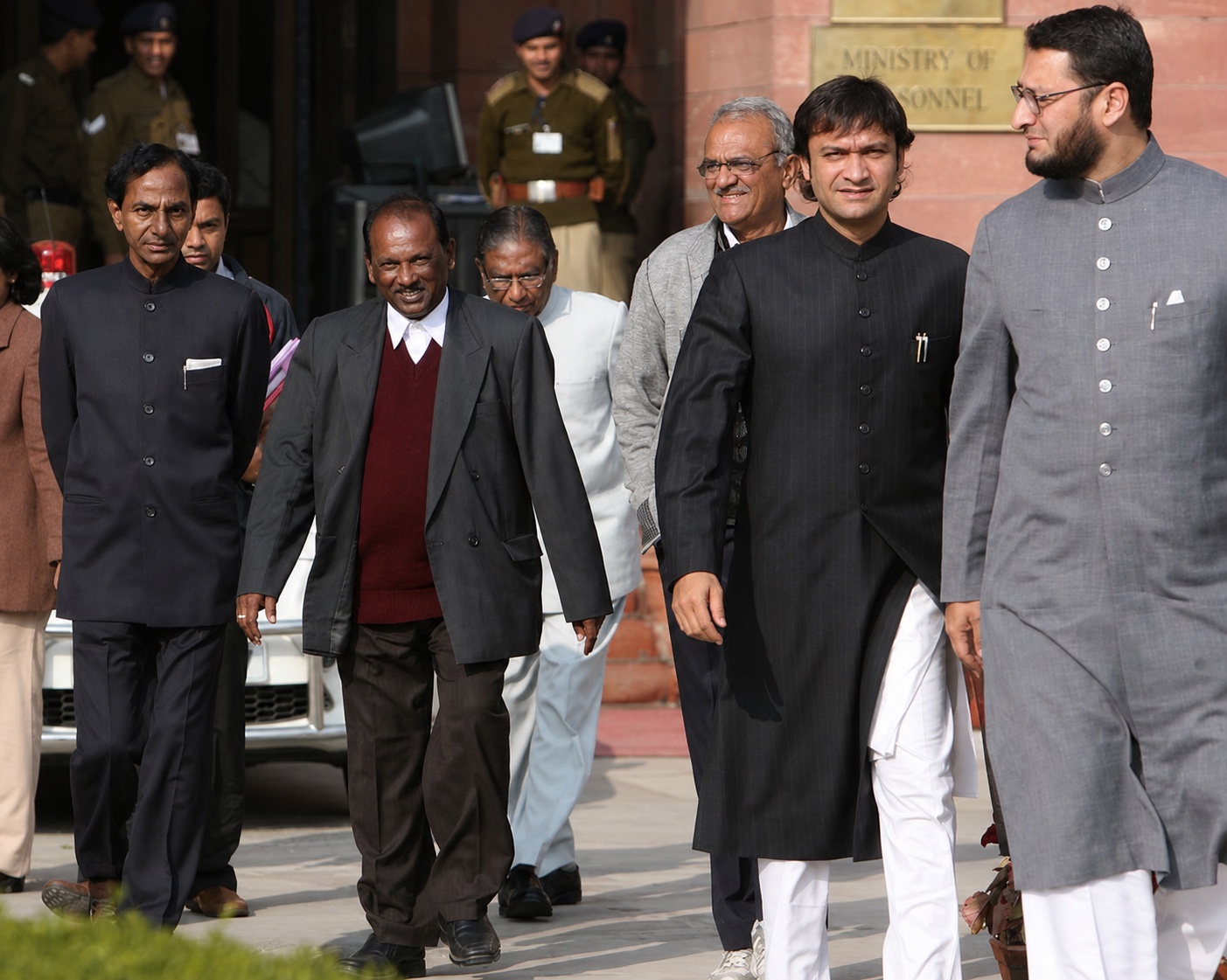
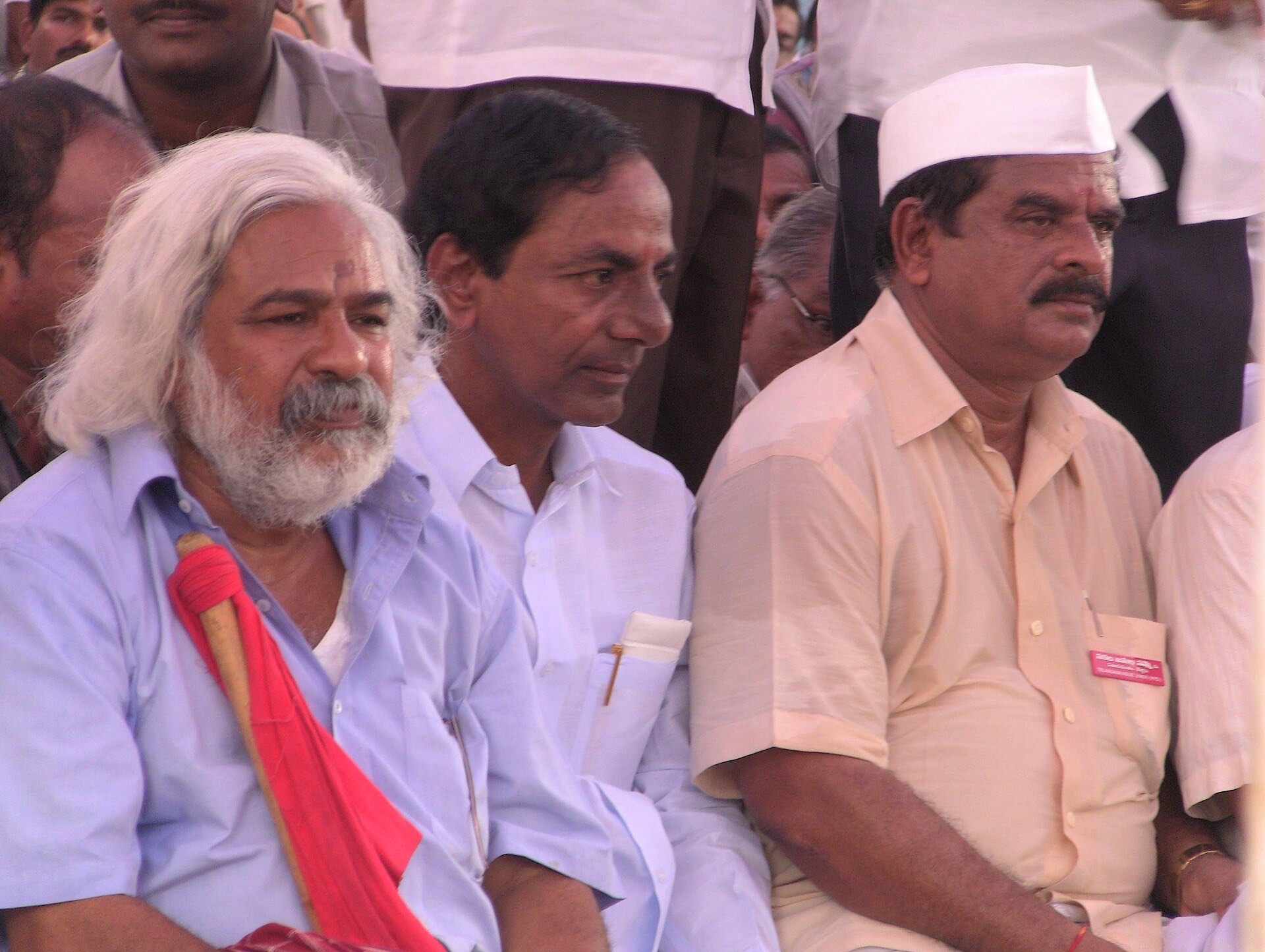
The Telangana Joint Action Committee was born in the turbulent days of December 2009 and January 2010. It was KCR who conceived it, proposed it and chose its convener. The idea was his, the architecture was his, and the strategic purpose was precisely calculated: to bring all the dispersed energy of the movement, the students of Osmania University, the employee associations, the trade unions, the cultural organisations, the civil society groups, back under the discipline of a coordinated structure, while keeping that structure formally independent of TRS as a political party. As author Inukonda Thirumali observed, the TJAC's purpose was to bring all Telangana activists under the various joint action committees, particularly student activists, back under the control of political leadership. KCR chose M. Kodandaram, a political scientist and experienced civil liberties activist, as convener precisely because a non-TRS convener gave the TJAC credibility as a genuinely broad people's forum rather than a party extension.
Why the TJAC Was Needed
The existing movement had a structural problem that the TJAC solved. TRS was a political party, subject to electoral calculations, coalition considerations and the constraints that come with contesting and winning elections. When TRS called for agitation, opponents could dismiss it as political theatre. When it entered coalitions, supporters could accuse it of compromise. A non-party forum that brought together the same political parties alongside civil society, students, academics and professionals was a fundamentally different thing. It could mobilise without being accused of electioneering. It could criticise any party, including Congress and TDP, without those parties knowing how to respond.
As one TJAC leader observed: "When we criticise the TDP or the Congress, they don't know how to counter us. We are like a bulletproof shield for TRS." And Kodandaram put it with equal precision: "Since it is a non-party forum fighting for Telangana, everybody felt they were part of it. Voters wouldn't respond to a party, but they would to TJAC."
The Composition of the TJAC
Kodandaram: The Right Man for the Role
M. Kodandaram, the political scientist and civil liberties activist whom KCR chose as TJAC convener, brought precisely the qualities the role required. He was known and respected across the entire movement's spectrum, from political parties to student bodies to civil society. He was not a TRS member, which gave the TJAC its independence and credibility as a genuinely broad forum. And he was tireless, addressing press conferences, public meetings and awareness campaigns across Telangana day after day through the movement's decisive years.
They can't turn back the wheel of time, and the time for Telangana has come.
M. Kodandaram, TJAC Convener, January 2014, on an awareness campaign to VikarabadThe February 2010 By-Elections: The TJAC's First Test
In February 2010, soon after the TJAC was constituted, it called on all Telangana-supporting MLAs to resign their assembly seats in a demonstration of commitment and as a trigger for by-elections that would test the movement's electoral strength. Twelve MLAs resigned. Every single one of them was re-elected, with staggering majorities.
The by-election results were definitive. The TDP, despite its strong party machinery and significant backward caste support base in Telangana, lost deposits in every single seat it contested. Four Congress candidates also lost their deposits. The embarrassment extended to the Congress state president, who lost his own seat. The mandate could not have been expressed more clearly: Telangana's voters were with the movement and with any legislator who had demonstrated their commitment to it by resigning their position.
Why It Was a Master Stroke
The TJAC was a master stroke for several interconnected reasons. It solved the fragmentation problem, bringing the dispersed energy of December 2009 into a single coordinated structure. It solved the political legitimacy problem, making the demand for statehood the position of a broad people's coalition rather than the programme of one party. It solved the media problem, giving the movement a spokesperson in Kodandaram who could address any audience with the authority of a non-partisan forum. And it solved the electoral problem, providing a structure through which the movement's support could be translated into votes without those votes being channelled exclusively through TRS.
What the TJAC Achieved
- Brought 28 civil society organisations and three political parties spanning the full ideological spectrum, from BJP to CPI ML, under one coordinating roof.
- Organised the movement at every level from state leadership to individual villages, creating a chain of command that could mobilise within hours across all ten districts of Telangana.
- Demonstrated through the February 2010 by-elections that the mandate for statehood was so strong that any legislator who resigned in support would be returned to office with a larger majority.
- Sustained the movement's momentum and direction through 2010, 2011, 2012 and 2013, keeping the pressure on the central government through the years when the Sri Krishna Committee deliberated and then when its report was being debated.
- Organised the Maha Garjana in Warangal on 16 December 2010, bringing an estimated 25 lakh people to one place in what was the largest single gathering in the history of the Telangana movement.
- The Sakala Janula Samme, the Million March and the sustained agitations of 2011 to 2013 were all coordinated under the TJAC's banner, keeping the issue on the national agenda until Parliament finally voted in February 2014.
The Telangana Joint Action Committee was dissolved after statehood was achieved in June 2014, having fulfilled the purpose for which it was created. In the four years of its existence, it had transformed the Telangana movement from a political party's demand into a people's movement of historic scale and demonstrated to the Government of India that the demand for a separate state was not the project of one party or one leader but the settled will of an entire people. That demonstration, sustained through years of agitation, ultimately made parliamentary approval not just possible but, in the judgment of the Congress party's own leadership, politically necessary. Without the TJAC, the road to 2 June 2014 would have been longer and harder. With it, it became irreversible.